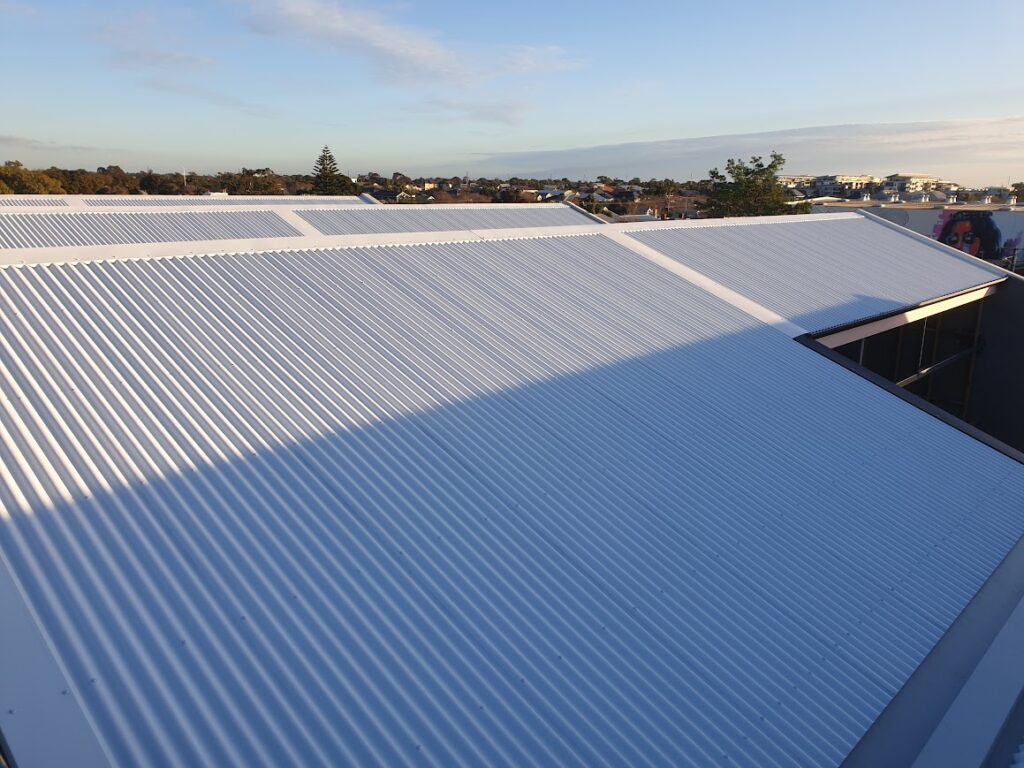
Active leak in an occupied Dallas commercial building? We deploy emergency dry-in crews 24 hours a day, stop the water intrusion, then deliver a written permanent repair scope — two separate conversations, both handled.
October 2019 produced the most damaging tornado outbreak in North Dallas in decades — six confirmed touchdowns across the NW Dallas, Preston Hollow, and Vickery Meadow corridors, with wind speeds up to and blew parapet caps off office buildings along LBJ. We had crews running emergency tarps and temporary membrane patches within hours of the all-clear. That kind of storm response is what we prepare for year-round.
Emergency roof work on a commercial building is a two-phase problem. Phase one is stopping the water: temporary dry-in with a compatible membrane lap, roof tarps weighted and fastened against wind, interior water diversion if the building has active ceiling damage. Phase two is the permanent repair — scoped properly after the building is stabilized, never oversold in the heat of an emergency. We separate these phases explicitly because owners who get a permanent-repair contract signed at 11 PM during an active storm event often pay for more than they need.
Our emergency dispatch covers Dallas County, Collin County, and Denton County.
Inner Loop (downtown, Uptown, Medical District, Oak Lawn, Deep Ellum, Bishop Arts): 4-hour maximum dispatch during business hours for most emergency calls. After-hours and weekend dispatch takes 2-4 hours from call to crew-on-site — our on-call project manager is always reachable and dispatches from our Uptown location at .
I-635 Ring (Garland, Mesquite, Irving, Carrollton, Farmers Branch, Balch Springs): Same-day dispatch. Typical arrival is 3-6 hours from call depending on crew availability and active weather conditions across the metro.
Outer Suburbs (Plano, Frisco, McKinney, Allen, Denton, Arlington, Grand Prairie): Next-day dispatch standard, same-day for major loss events (active building penetration, structural exposure, multi-building complex).
Emergency dry-in is a temporary, not permanent, repair. We cover the failure zone with a compatible membrane lap or a properly weighted tarp assembly — fastened to the roof field with fasteners that do not penetrate the building interior, weighted at perimeter edges to resist the 70 mph gusts that move through DFW during spring storm systems. We photograph the temporary installation, document the failure mode, and leave the building weathertight.
The following day or once the storm system has cleared, we return for the permanent repair scope walk. At that point we core-pull if insulation saturation is suspected, document the full extent of the damage, and produce a fixed-price repair scope. We present the temporary scope invoice and the permanent repair scope separately — you approve each independently. Nothing about the emergency dry-in creates an obligation to use us for the permanent repair.
Post-storm common scope items we see across Dallas: membrane blow-off at perimeter edges where fastener patterns were undersized for wind uplift, parapet cap blow-off exposing the cap flashing base, drain covers and strainers blown off creating open drains, and punctures from debris impact (the 2023 spring hail event across northern Dallas County left 2.75-inch stones on roofs from Addison to Garland).