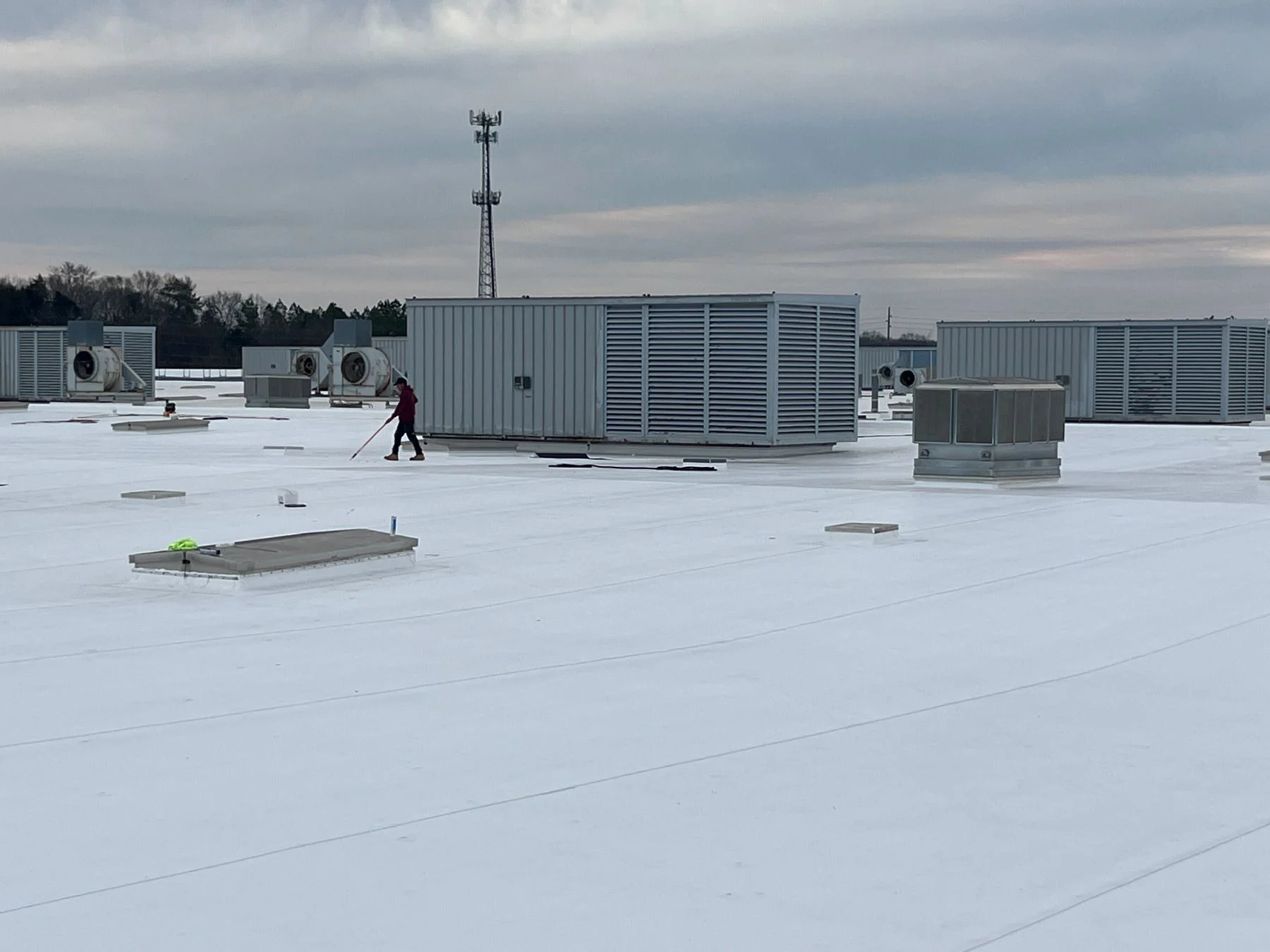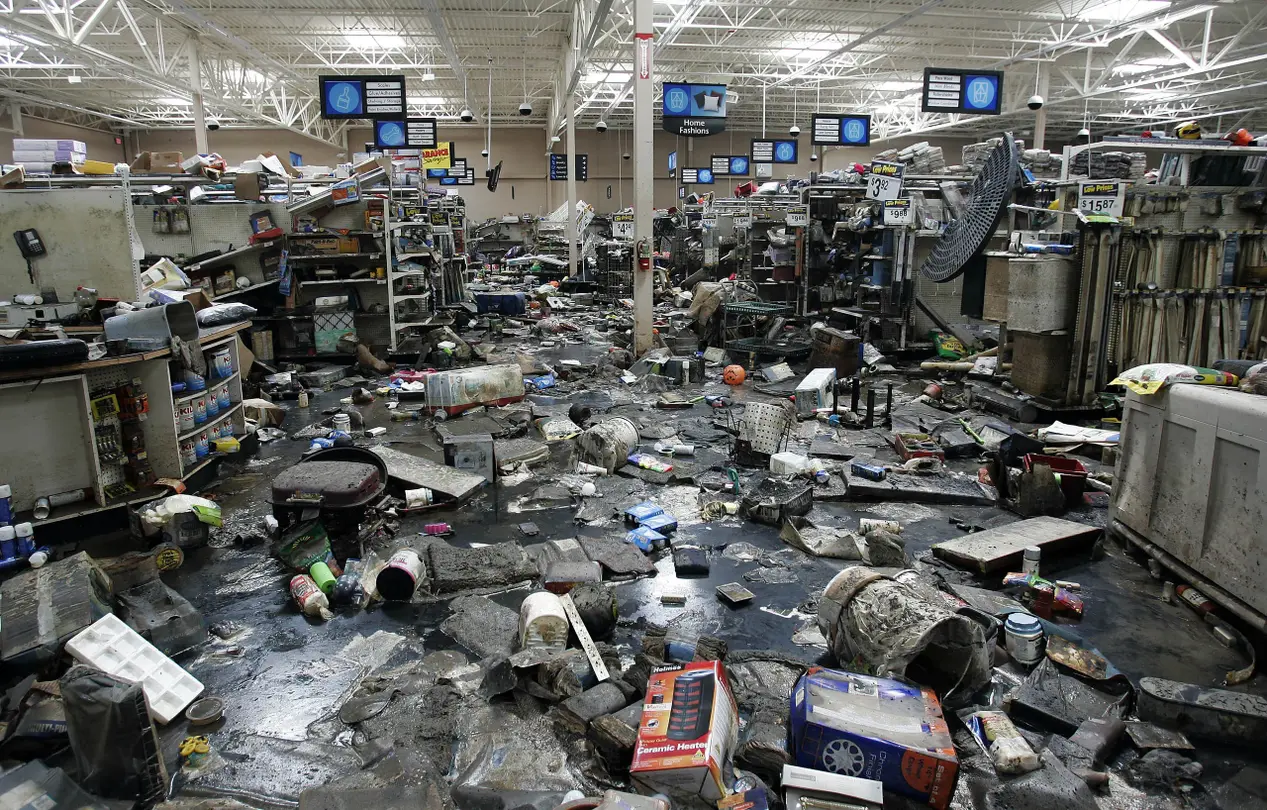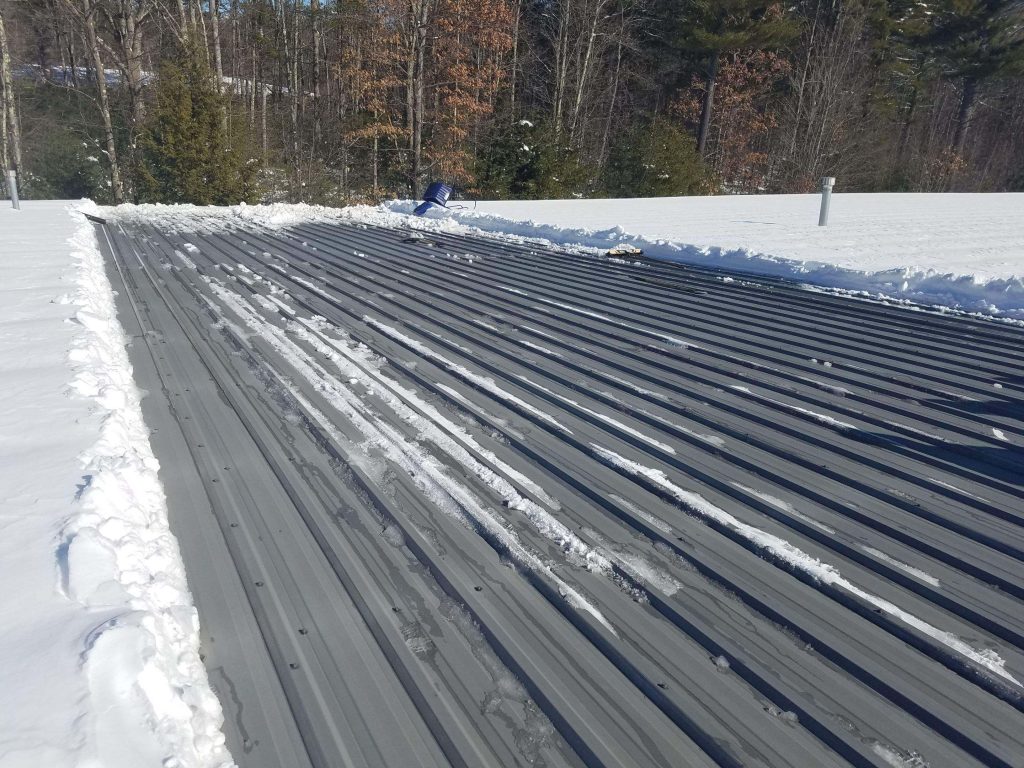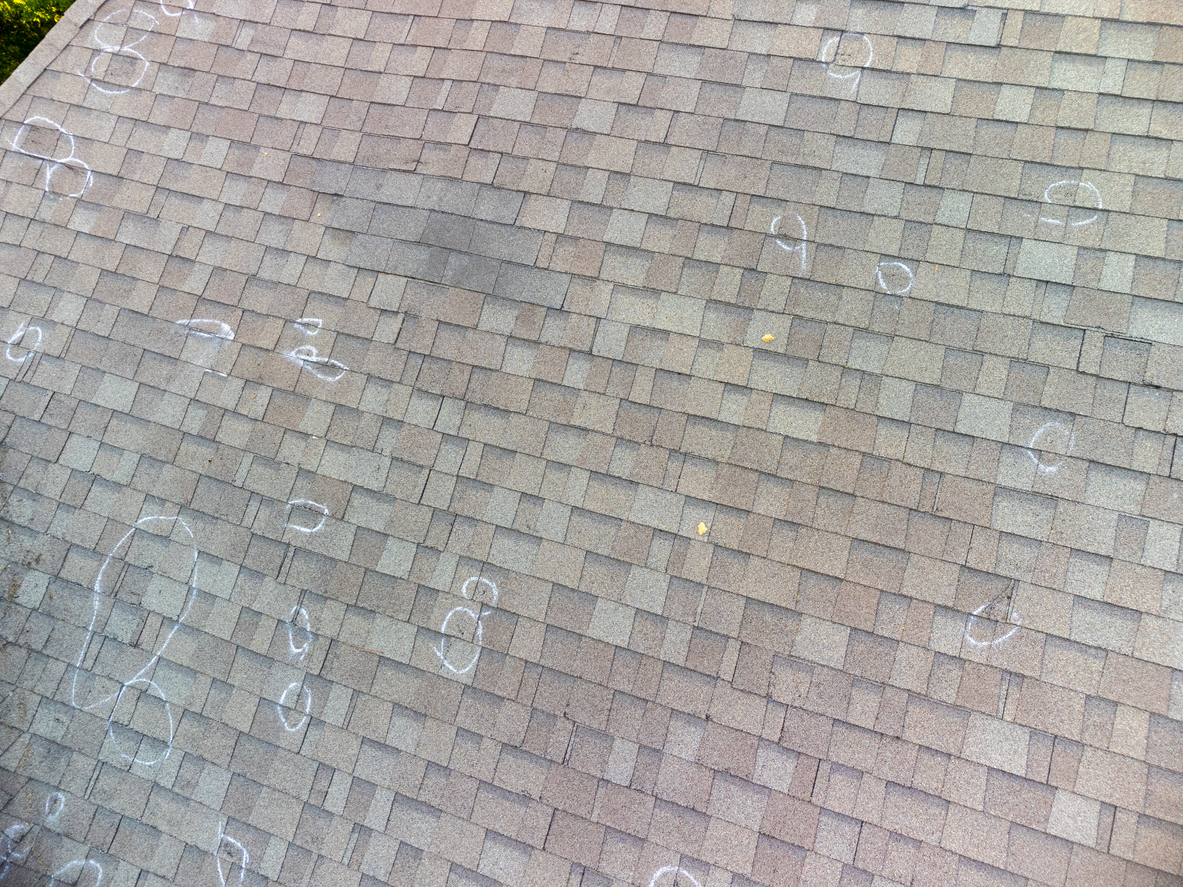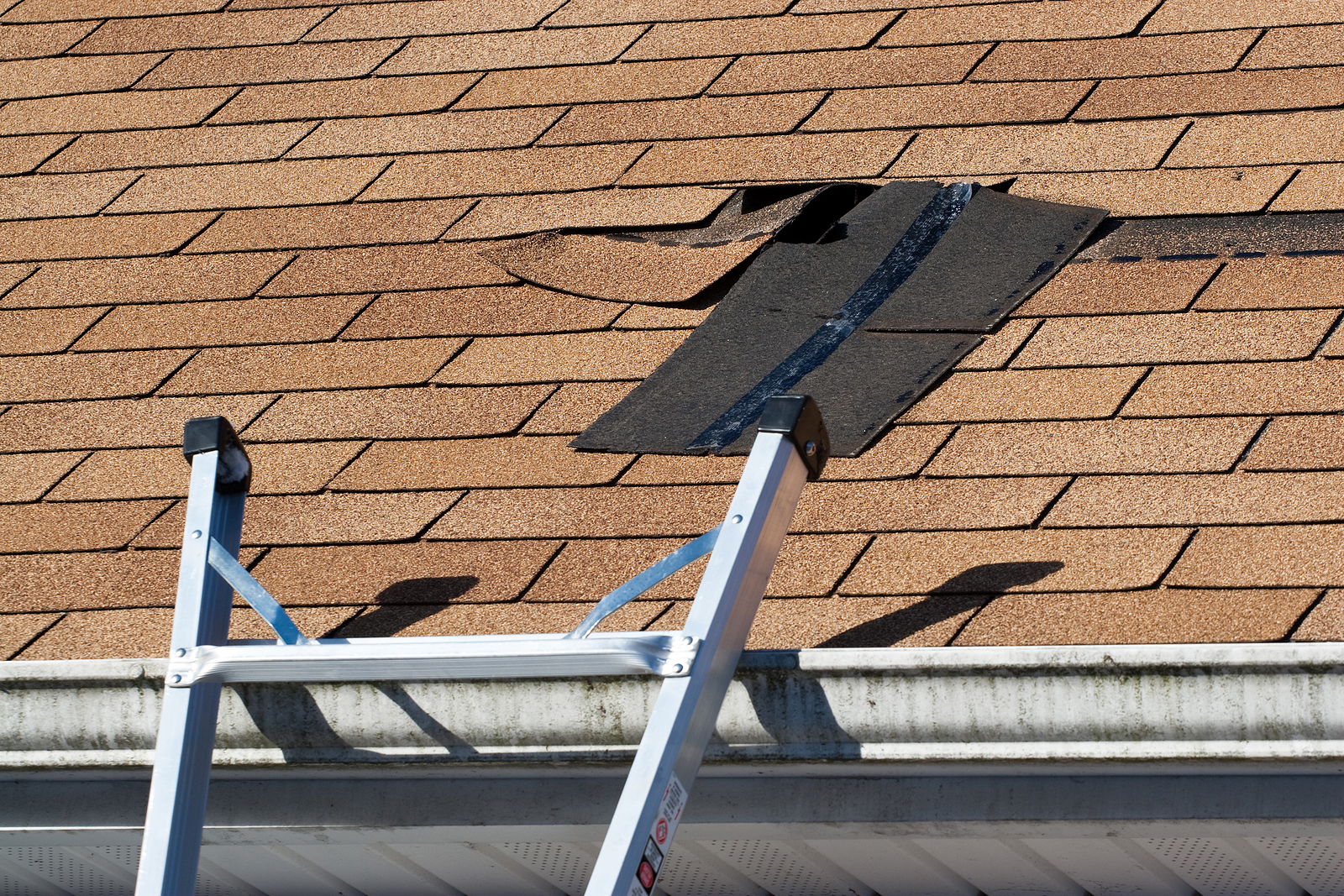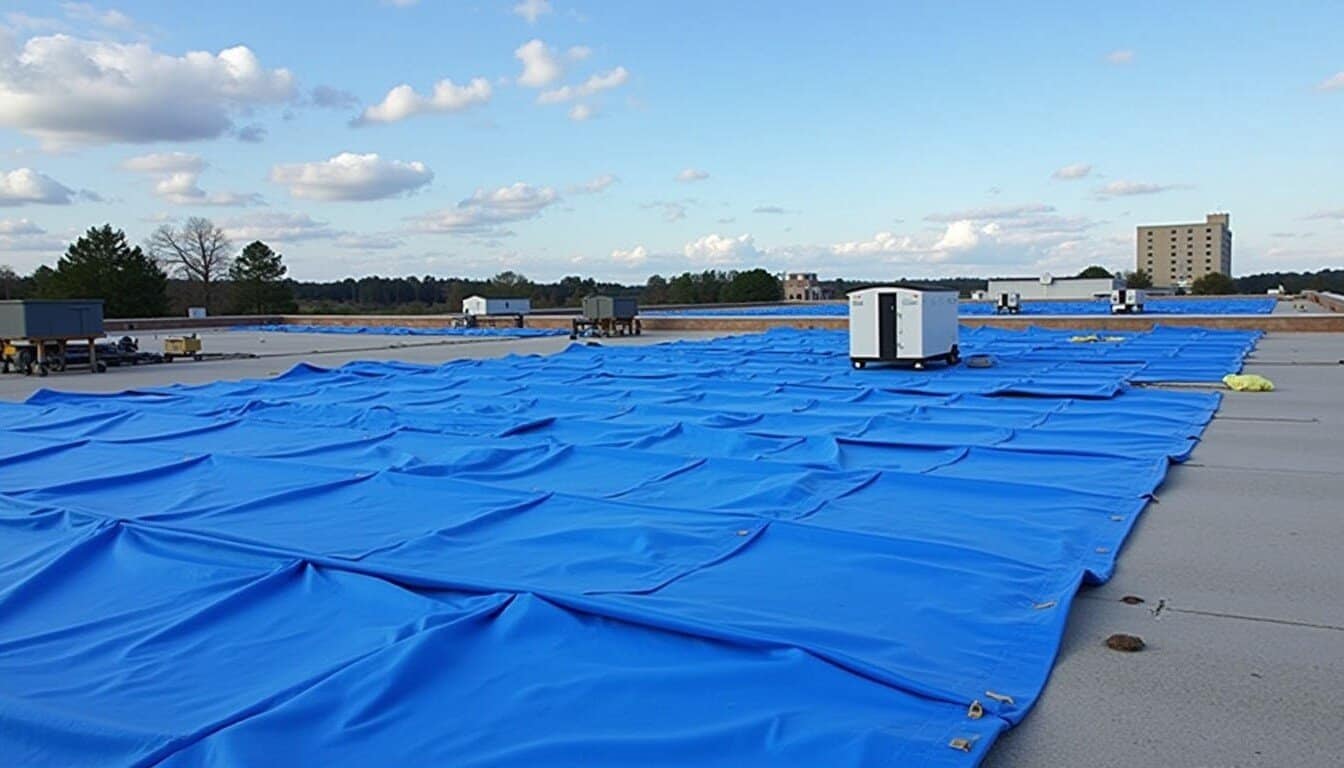
DFW lives inside the southern Hail Alley. The 2023 hail season produced documented 2.75-inch stones across Collin and Denton Counties. The 2019 October tornado outbreak put 140 mph straight-line winds across northwest Dallas. These events generate roof claims at scale — and most of those claims fail or under-settle because the damage documentation is insufficient, not because the damage was absent.
Our damage-repair work is documented to insurance-grade standards.
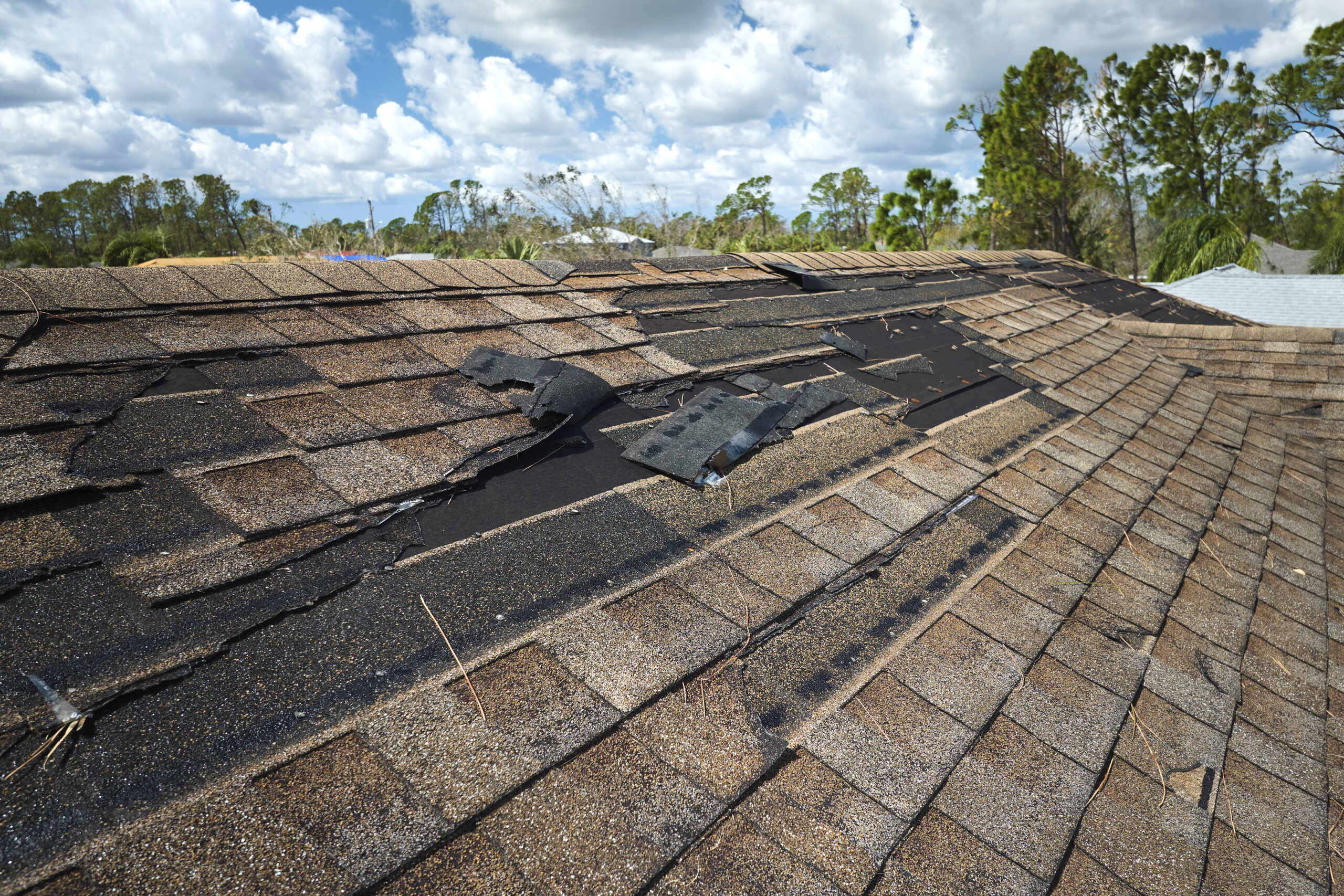
When hail hits a Dallas commercial flat roof, the damage that costs you money is not always the damage you can see from the parking lot.
Wind damage on a flat commercial roof does not always look like wind damage. The failure pattern depends on attachment method, membrane age, and where the wind hit. We read those patterns and build documentation that captures what actually happened.
The spring squall lines that come through Dallas rarely produce just one type of damage. Wind moves the membrane edge, hail compromises the field, and water follows both paths. We document all three perils and build a scope package that separates what each one did.
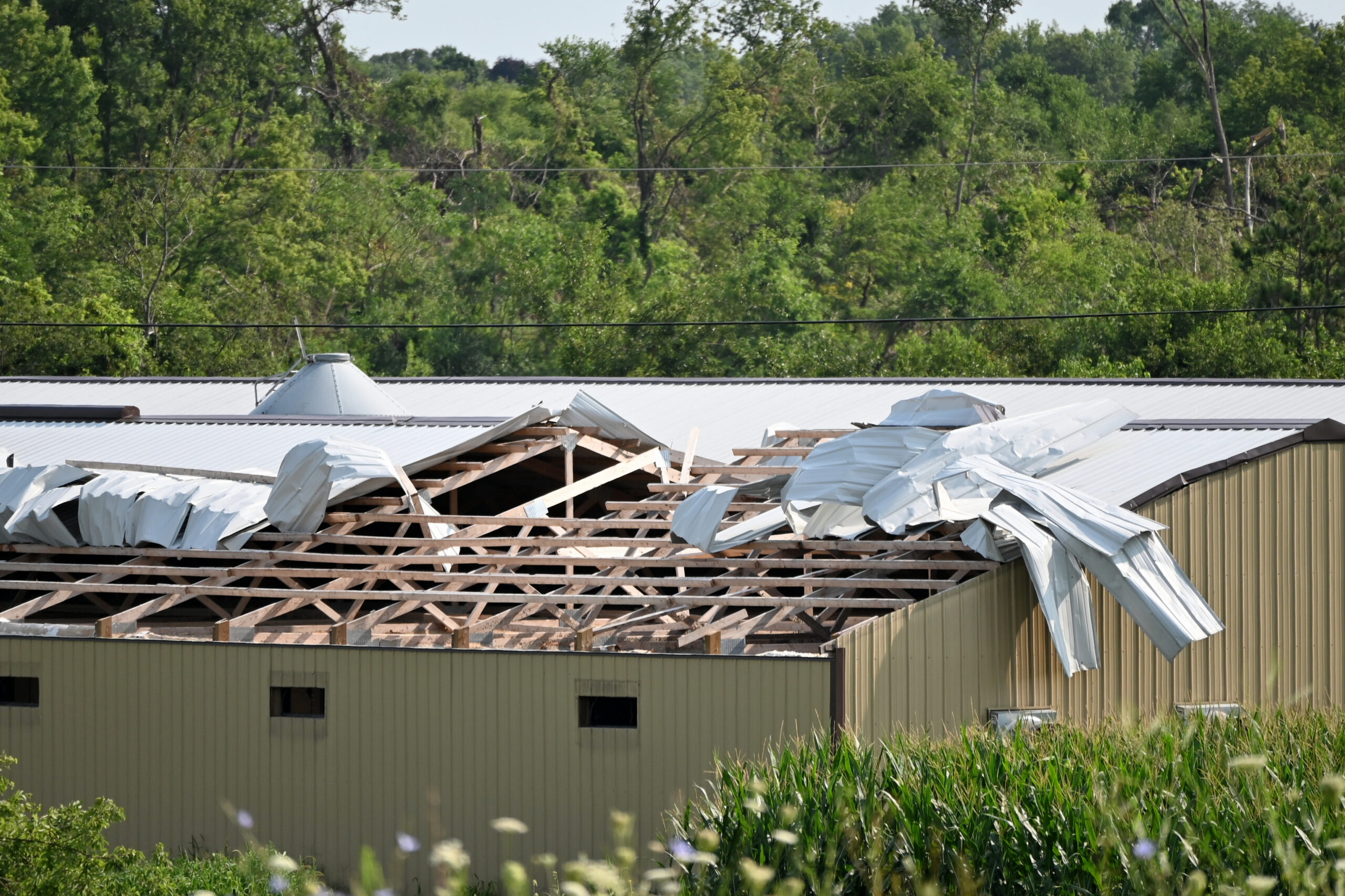
Tornado damage on a commercial flat roof goes deeper than membrane. The deck, the joists, and the structural connections may be compromised. We scope what is actually there before any repair work starts.
Most commercial roof leaks in Dallas are not hard to find — if you know where to look. We trace the source before we propose a repair, because patching the wrong location wastes money and leaves the leak active.
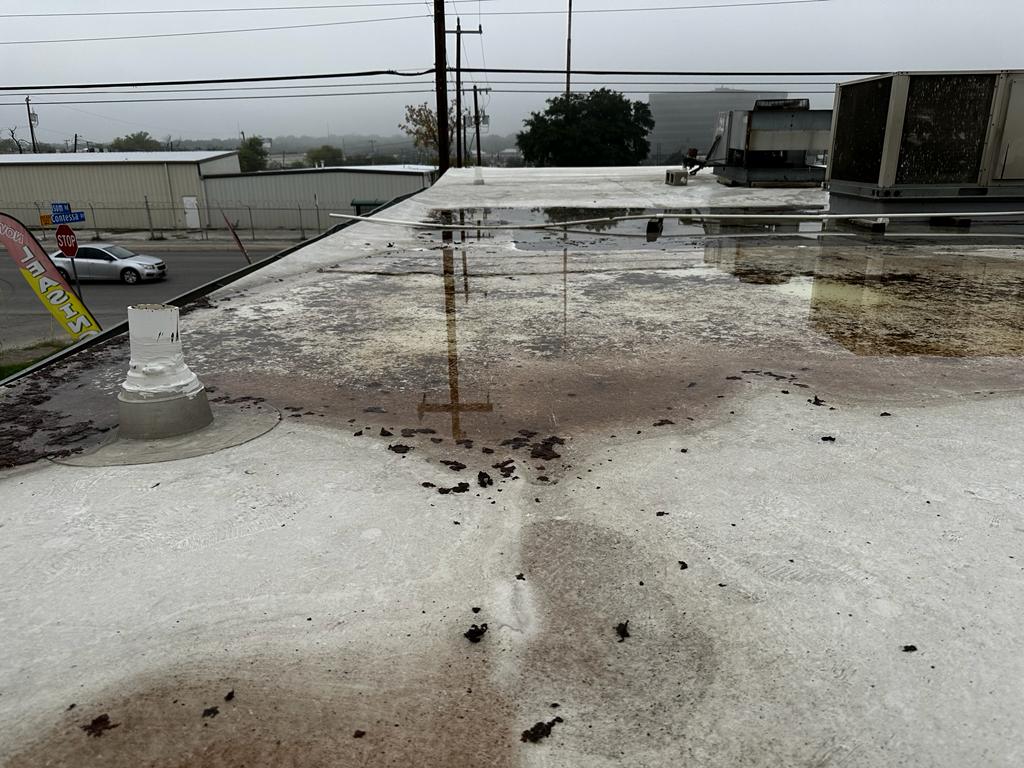
Standing water on a Dallas commercial flat roof is not a cosmetic problem. Chronic ponding degrades every layer of the roofing system from the membrane down to the deck — and the damage is usually worse than it looks from the roof surface.
Fire damage to a commercial roof is almost never limited to what burned. Heat damage, water damage from suppression, and structural compromise from the event itself all need to be scoped before the repair sequence can be determined.
Winter Storm Uri in February 2021 produced 10 consecutive days of below-freezing temperatures in Dallas — a thermal shock event that the roofing systems on most Dallas commercial buildings were not designed to handle. We have been repairing the damage ever since.