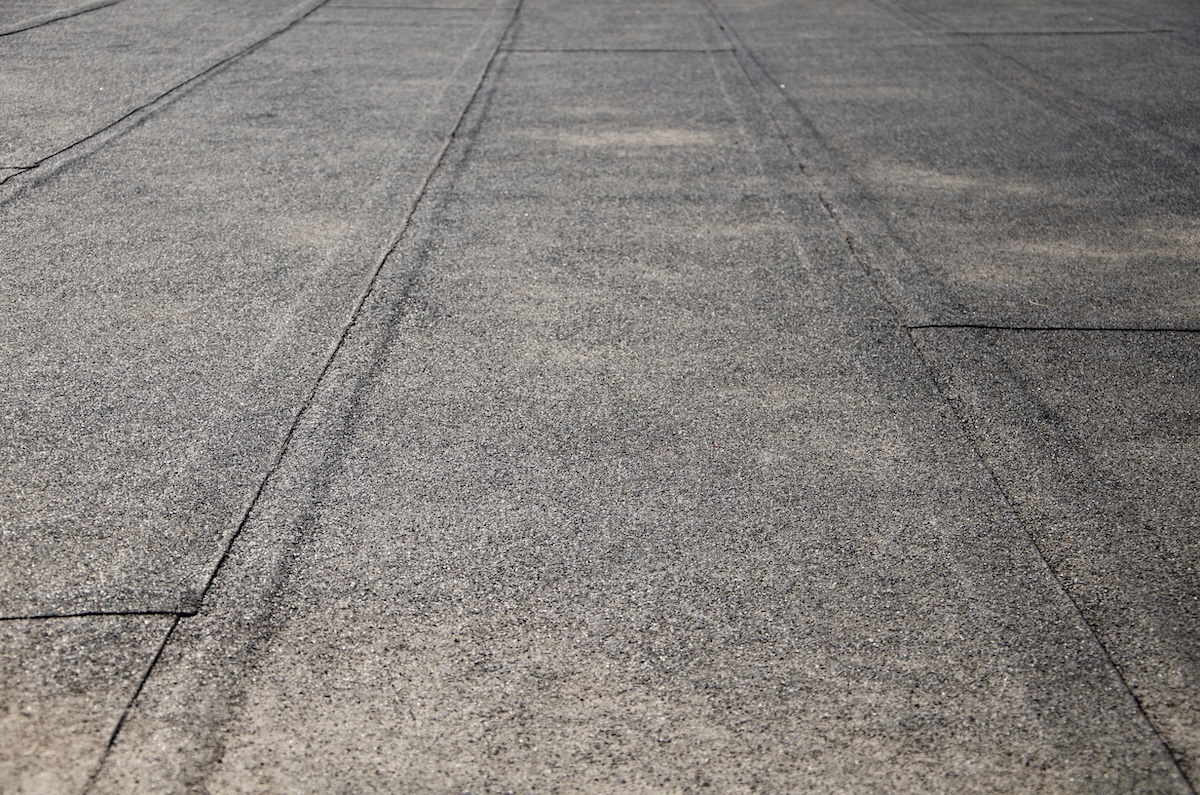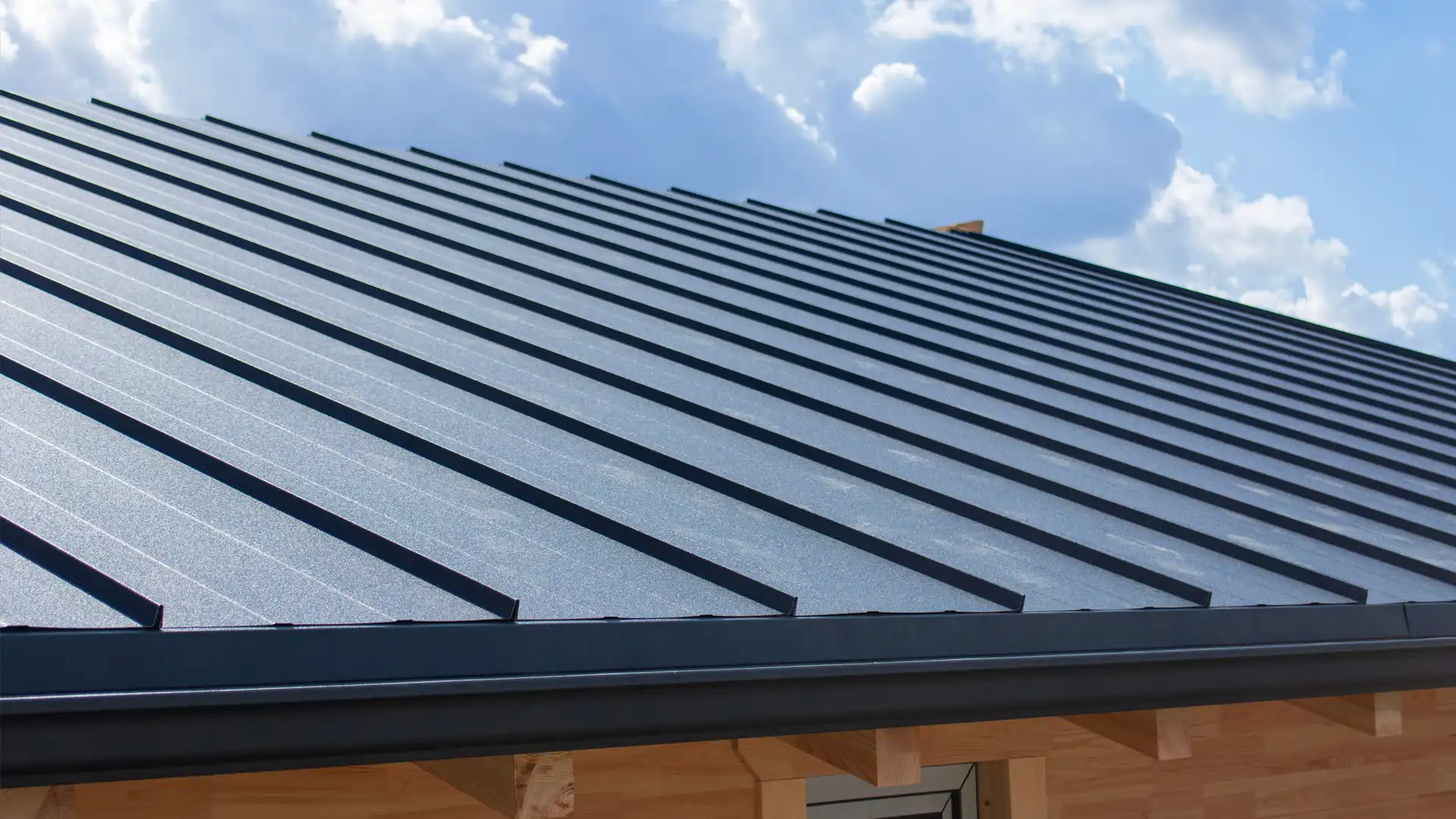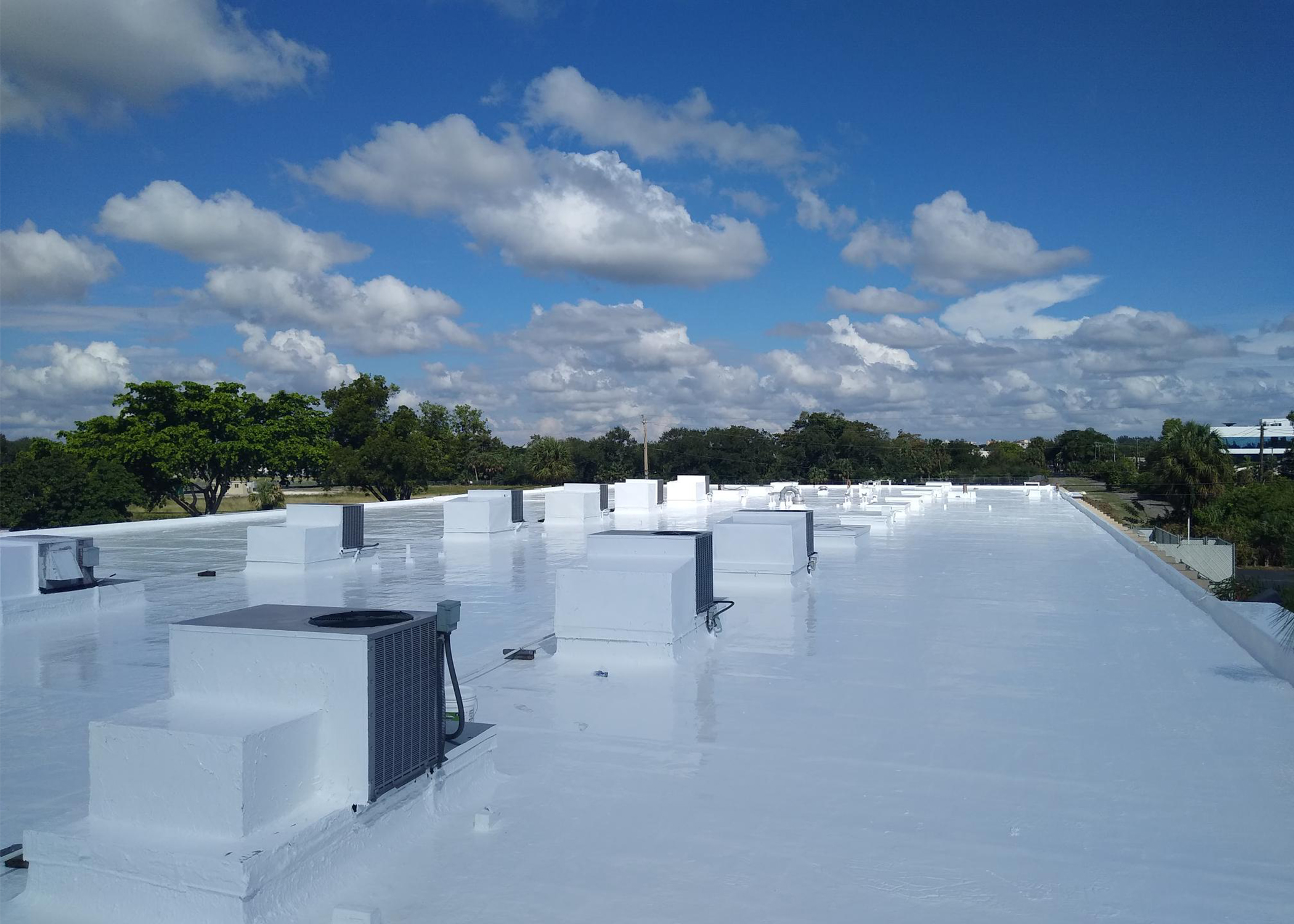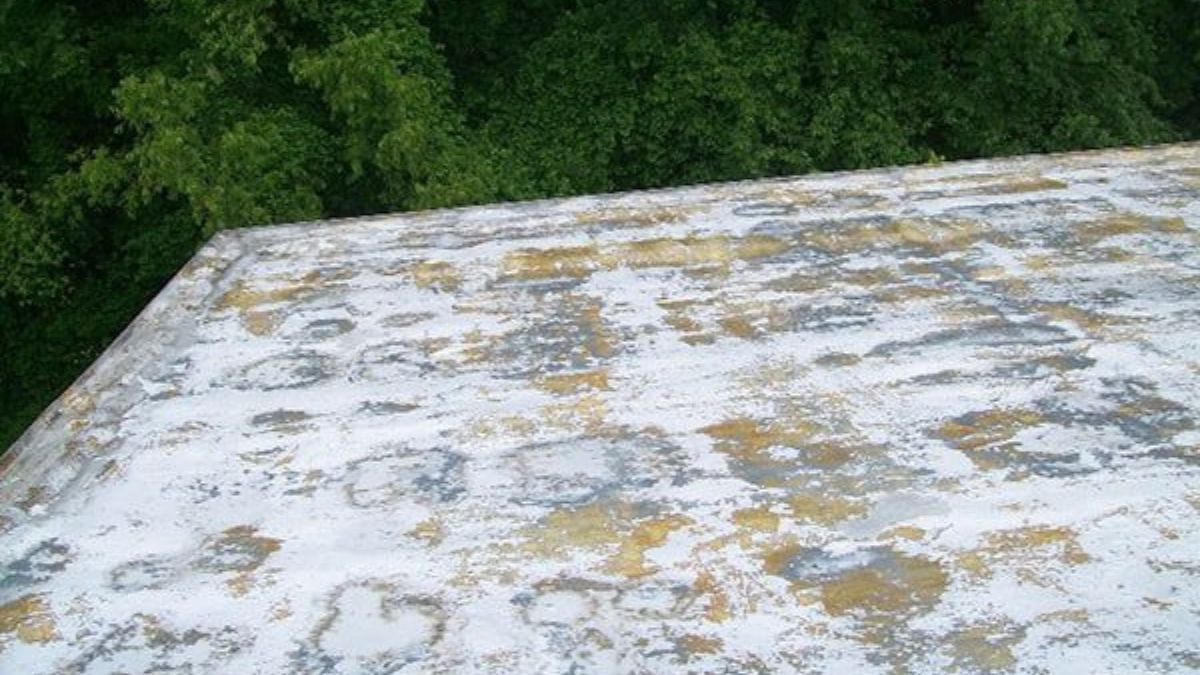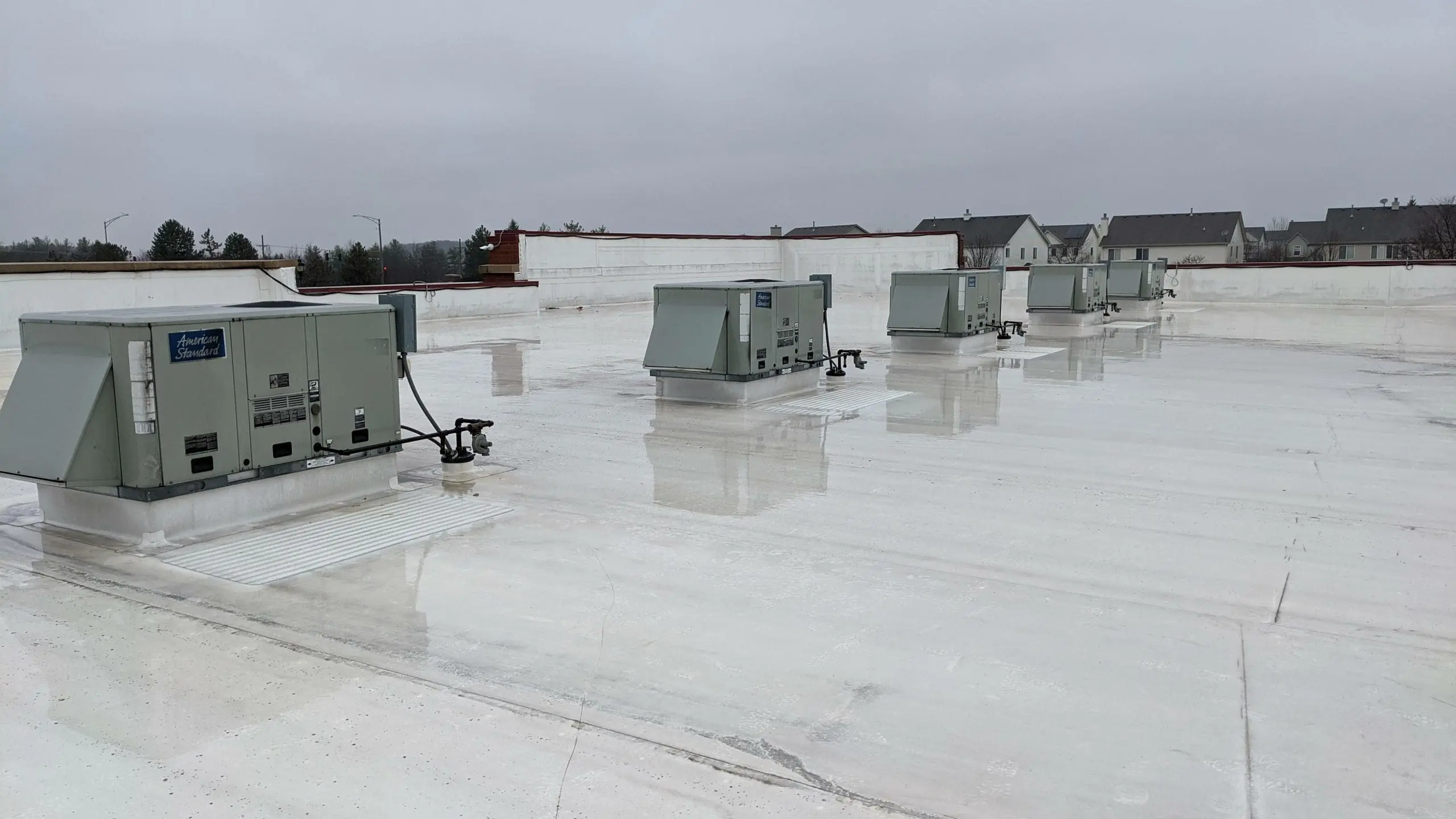
PVC membrane handles what TPO and EPDM cannot: grease-exhaust exposure, animal fats, and chemical fallout from rooftop equipment. We install PVC 50-mil and 60-mil systems on Dallas restaurants, food-processing buildings, and chemical-exposure industrial facilities — with 25-year manufacturer warranty paths available.
PVC (polyvinyl chloride) membrane is the specification for one narrow but important category of Dallas commercial building: any building where the rooftop is regularly exposed to grease, Restaurant row on Greenville Avenue, the food-processing buildings in the Bachman Lake area, industrial facilities along the Great Trinity Forest industrial corridor — these buildings destroy TPO and EPDM in years, not decades.
The reason is chemistry. TPO and EPDM are not formulated to resist oils and fat-based compounds. Grease exhaust from a commercial kitchen condenser hood, even modest exposure over five to eight years, will soften and degrade both membranes at the areas around the exhaust equipment. PVC is plasticizer-based and resists this category of exposure reliably — the Sika Sarnafil systems we install carry a 25-year warranty, and the manufacturer's warranty exclusions do not carve out grease exposure the way competitors' warranties do.
The tradeoff is cost: PVC runs higher than TPO per installed square, and the material is heavier to handle. But for the building where it is the right membrane, the cost premium is recovered in warranty longevity and avoided early replacement.
Restaurants and food-service buildings: Any Dallas restaurant with rooftop exhaust equipment — and that is nearly all of them — vents grease-laden air across the roof. The condensate from that exhaust lands on the membrane around the hood and works into any seam or lap in an exposed-to-grease location. We survey the exhaust equipment placement before specifying membrane type. Buildings on Greenville Avenue's restaurant corridor, Knox-Henderson, Deep Ellum, and Uptown dense restaurant blocks get PVC specifications when we write the scope.
Food-processing and cold-storage: Several Dallas-area food-processing facilities near the Farmers Market and along the Stemmons Corridor run 24-hour operations with ammonia refrigeration and high-wash rooftop environments. PVC handles ammonia and most industrial cleaning agents that would attack TPO.
Dry-cleaning and chemical operations: Perchloroethylene and other dry-cleaning solvents attack standard membrane formulations. PVC's chemical resistance profile covers most of the compounds that commercial dry-cleaning plants exhaust. The Design District in Dallas has several of these buildings in its aging commercial inventory.
Sika Sarnafil is our primary PVC specification. Their 25-year warranty on qualifying PVC installations is the longest in the industry, their formulation has the longest performance history in North Texas conditions, and their regional rep support in Dallas is consistent — we get inspection scheduling within two weeks of closeout notice, which matters for projects that need to close out fast. Sarnafil's G-476 and TS-77 systems are what we install on most Dallas commercial PVC projects.
Other PVC manufacturers we work with include Duro-Last (strong on prefabricated systems where the roofing is cut and sealed in-factory), Versico PVC, and Carlisle's Sure-Weld PVC. Each has situations where they are the right spec — Duro-Last's prefab approach reduces field seaming on complex rooftop layouts, which is relevant for Dallas buildings with dense rooftop equipment. We match the manufacturer to the project, not the other way around.
PVC is heat-welded the same way TPO is — the seam weld creates a permanent bond that is the full strength of the membrane. Seam width on PVC needs to be 1.5 inches minimum with at least 1.25 inches of clean weld. We test every seam with a probe and a peel-test sample before closeout.