214-441-608924/7 Emergency SupportDallas, Texas Commercial Roofing

Planning Capability

Competitive Bid Coordination — Commercial Roofing Contractors Dallas

We help Dallas building owners run honest competitive bid processes — writing scopes detailed enough that multiple qualified contractors can price on equal footing. We participate but do not lock you in.

Inspect

Document membrane age, drainage, access, penetrations, storm marks, and active leak points.

Scope

Choose repair, recover, coating, replacement, or maintenance from field evidence.

Maintain

Keep logs, post-storm notes, warranty closeout, and capital timing in one usable record.

We help Dallas asset owners write roofing scopes detailed enough to run honest multi-contractor bid processes — then we submit our own bid on equal footing with everyone else.

Most commercial roofing bids in Dallas fail as competitive processes before the first contractor shows up. The scope is too thin. One contractor specifies 60-mil TPO; another specifies 80-mil. One quotes fully adhered; another quotes mechanically attached. One prices a 20-year NDL warranty path; another does not include warranty coordination at all. The building owner gets three numbers with no way to compare them.

We help owners fix this before the bid goes out. When an owner wants to run a competitive process — whether to keep incumbents honest, to satisfy board or lender procurement requirements, or just because the project is large enough to warrant it — we write the scope document that levels the playing field. Every bidder prices the same membrane thickness, attachment method, insulation stack, flashing specification, and warranty path. The bid tab becomes an apples-to-apples comparison.

We then participate as one of the bidders. If you select a different contractor on price or relationship, we have done the work anyway because running a credible process protects our reputation in the Dallas owner community. That is a sustainable arrangement for us. Owners know we are not running a scope-writing engagement as a Trojan horse for sole-source work.

A bid-ready roofing scope for a Dallas commercial building specifies at minimum: membrane product line and thickness (60-mil vs. 80-mil TPO; 60-mil EPDM; 50-mil or 60-mil PVC), attachment method (mechanically attached, fully adhered, or ballasted, with the fastener pattern density designed against the building's IBC 2021 wind-uplift zone and exposure category), insulation specification (polyiso R-value to current IECC 2021 minimums, cover board type, tapered package if required), flashing details at all penetrations, drains, parapets, and curbs (by reference to the specified manufacturer's published detail library), warranty path (15-year vs. 20-year vs. 25-year NDL, with or without manufacturer-funded labor), and closeout documentation requirements (photo log, roof zone diagram, warranty registration, maintenance contract).

Scopes that leave these items open create the bid spread that makes competitive processes useless. A single membrane thickness change from 60-mil to 80-mil shifts installed cost roughly $0.40-0.60/sq ft on a 100,000 sq ft roof — a $40,000-60,000 swing that has nothing to do with contractor quality or efficiency. Owners who let that stay open in the scope are comparing bids that are not the same project.

We also write the bid form — the table structure that forces all bidders to break out labor, material, warranty, and closeout line by line. This alone surfaces apples-to-oranges gaps that a lump-sum bid format conceals.

Once the scope document is issued to all bidders, we submit our own bid on identical terms. The bid process is the bid process.

Where we are often useful after bids come back: reference checking on contractors the owner does not know. Dallas's commercial roofing market has a handful of 30-year incumbents with deep relationships, a larger pool of mid-size specialty contractors with variable track records, and a rotating cast of out-of-state contractors who arrive after major hail events and disappear when the market cools. We can tell owners which contractors in the bid pool have closed-out projects with functioning manufacturer warranties, which ones have had warranty-inspection failures, and which ones are new to the market with limited DFW weather-event experience.

We do this reference-checking honestly even if the reference information favors a competitor. Our value in this market is knowing what we know — withholding it to win one bid burns a relationship that is worth more long-term.

Planning Capability

Questions we answer before work starts.

Do you charge for writing the scope document if we don't pick you?

No. We write the scope as part of our business development process. If the process results in another contractor winning the project, we have built a relationship with an owner who ran a credible process and knows we participated honestly. That is worth more to us over time than a single project fee.

How do you prevent the scope from being written to favor your own system or manufacturer preferences?

We specify by performance requirement wherever possible — minimum membrane thickness, minimum R-value, minimum wind-uplift rating, warranty term — rather than by manufacturer name. When a manufacturer has to be named (warranty inspection eligibility, for example), we list all qualified manufacturers that

Can we use a scope you wrote even if we decide to sole-source the project?

Yes. Some owners use the scope-writing engagement to produce a specification they then use in owner-direct negotiations with a single contractor. The scope document is yours. We retain no IP interest in a roofing scope we produce for your building.

How do you handle bid evaluation when the bids come back?

We will walk you through the bid tab line by line, flag scope exceptions (places where a bidder deviated from the specified scope), and flag unbalanced bids (where a contractor low-bids base work but prices allowance items at a rate that more than recovers the discount). We give you the analysis.

Capabilities

Related Capabilities

Planning Capability

Third-Party Roofing Quality Inspection — Commercial Roofing Contractors Dallas

Independent QA inspection during another contractor's commercial roof installation in Dallas — manufacturer warranty inspection support, seam testing, flashing detail verification, and documented findings.

Planning Capability

Commercial Roof Inspections in Dallas

Annual and semi-annual commercial roof inspections for Dallas buildings — zone-keyed photo logs, written condition deliverables, and documented maintenance records that keep manufacturer warranties intact.

Planning Capability

Commercial Roof Capital Planning in Dallas

Multi-year roof CapEx forecasting for Dallas commercial property owners — condition-data-driven sequencing, lifecycle cost analysis, and written capital defense for budget approval.

Planning Capability

Infrared Roof Scanning in Dallas

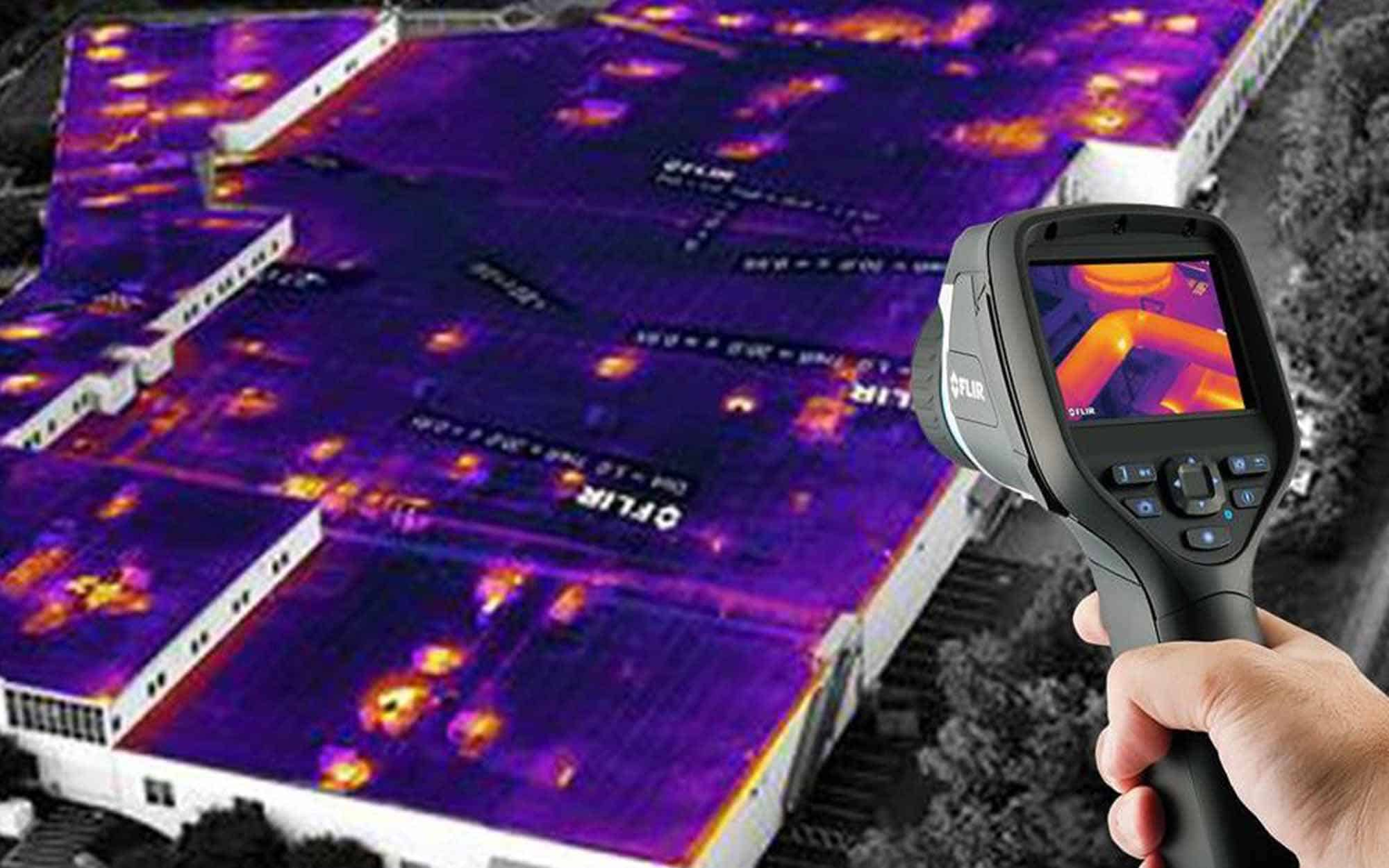
Infrared thermography for commercial roof moisture detection in Dallas — when IR works, when it doesn't, and how we use it with core sampling for confident moisture mapping.

Planning Capability

Maintenance Program Management — Commercial Roofing Contractors Dallas

Recurring maintenance contract administration for Dallas commercial roofs — semi-annual and annual cadence, documented inspection visits, and manufacturer warranty maintenance compliance.

Roof Service

Church and Religious Building Roofing in Dallas, TX

Commercial roofing for churches, worship centers, and religious facilities throughout Dallas, TX.

Roof Service

Drone & Infrared Roof Inspection in Dallas, TX

Aerial and thermal drone roof inspections for large low-slope commercial roofs in Dallas, TX. We map trapped moisture without foot traffic and document storm damage for claims.

Roof Service

Modified Bitumen Roofing — Installation and Recover in Dallas, TX

Modified bitumen roofing installation and recover for Dallas commercial buildings — torch-down and self-adhered systems, where mod-bit still makes sense and where it does not.