Recurring maintenance contracts for Dallas commercial roofs — semi-annual or annual inspection cadence, documented visits, and manufacturer warranty maintenance compliance built into every visit.
A commercial roof maintenance contract in the Dallas market means something specific or it means nothing. The kind that means nothing: a contractor shows up annually, walks the roof for 20 minutes, patches a couple of splits, invoices for a maintenance visit, and never produces documentation that satisfies a manufacturer warranty desk. Owners pay every year and the warranty lapses anyway because the submission format and timing requirements were not met.
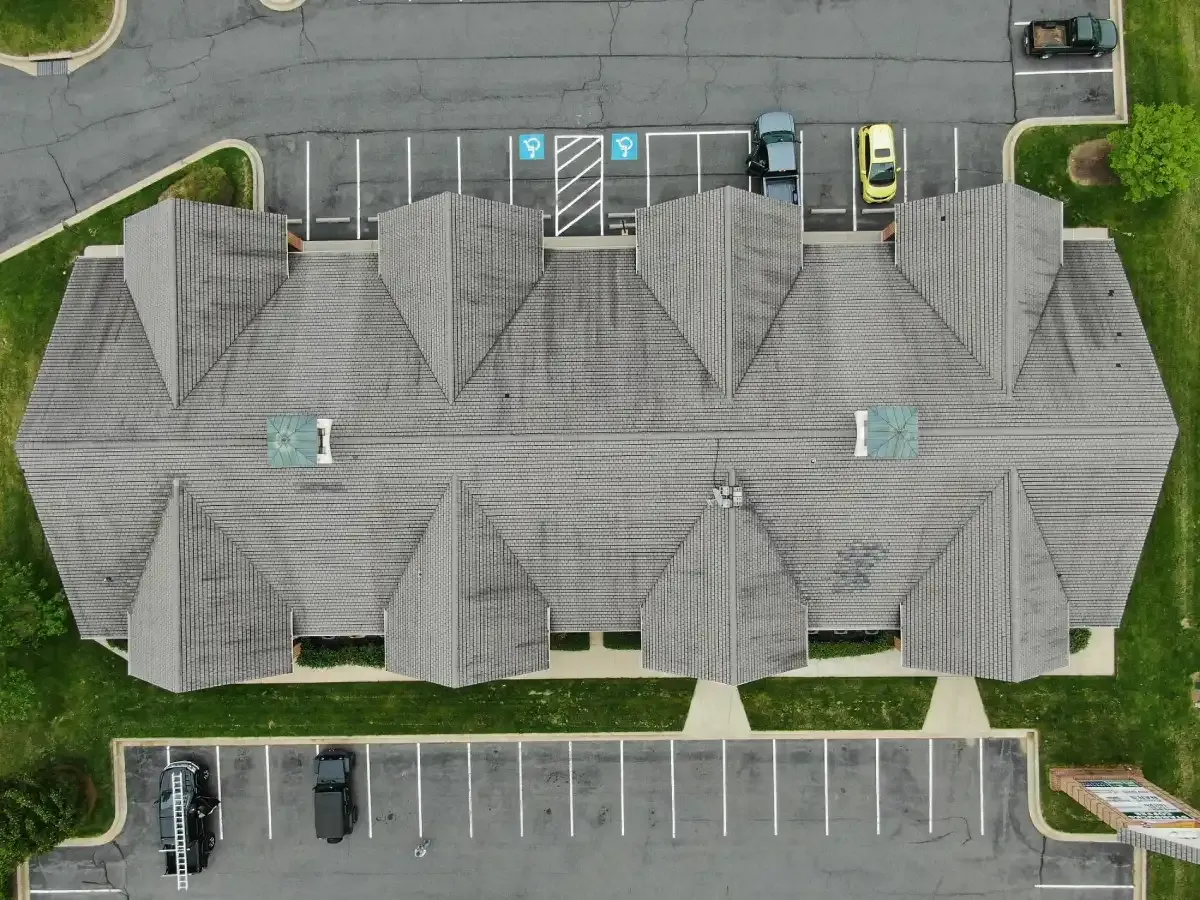
Our maintenance program is grounded in documentation first. Every visit produces a written condition report keyed to a roof zone diagram, a photo log organized by zone, a repair summary with before-and-after photos, and a manufacturer maintenance submission in the format the warranty desk accepts. For owners with multiple buildings on our program, the documentation is uniform across all properties — same zone diagram format, same photo organization, same report structure — so the facility team can read any building's report without learning a new format.
The visits themselves follow a checklist calibrated to the Dallas climate and the specific roof system on each building. What we check on a 2018 TPO building in Las Colinas is not the same checklist as what we run on a 1999 modified bitumen building in the Stemmons corridor. The maintenance program is not a one-size-fits-all vendor visit. It is asset management applied to a specific roof on a specific building.
Most manufacturer NDL warranties require documented inspection at minimum once per year. Some require semi-annual. We default to semi-annual for Dallas buildings for two reasons beyond the warranty requirement: the spring hail season (March through June) and the summer heat-stress window (July through September) each create a distinct category of roof stress that needs separate documentation cycles.
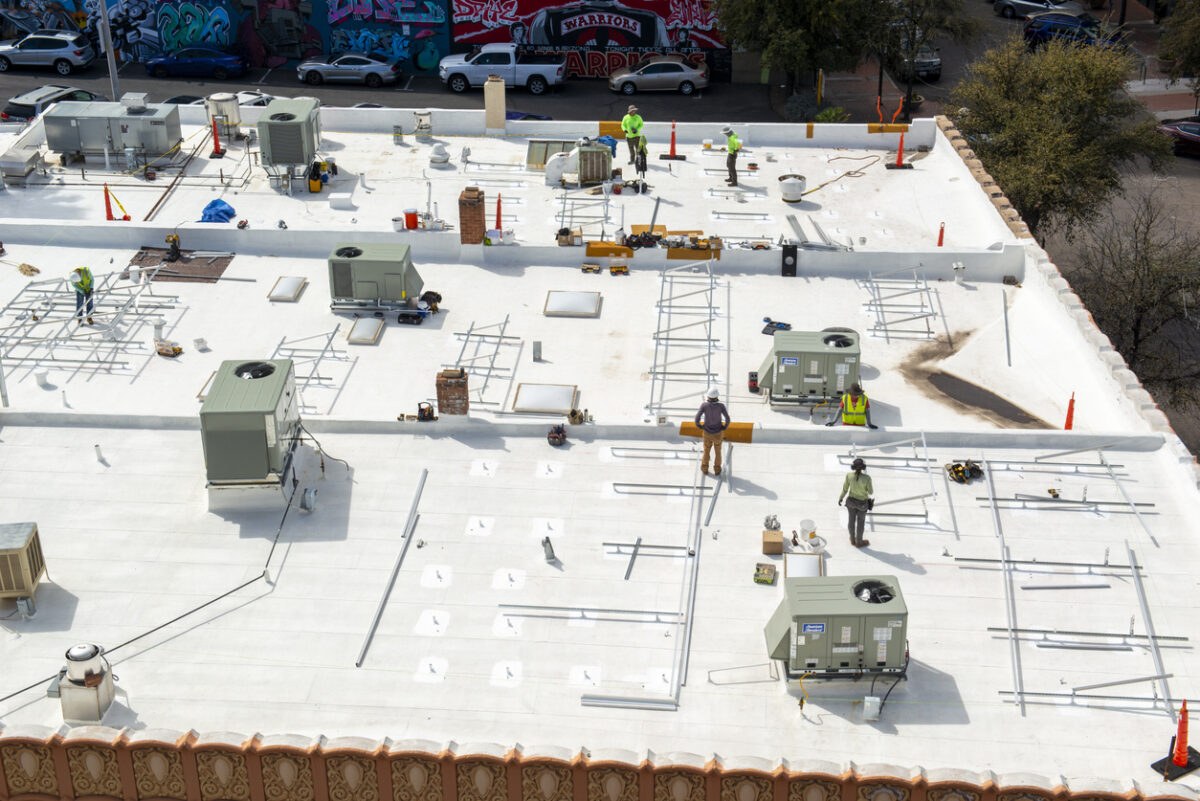
The spring visit (March or April, before peak hail season) documents baseline condition, clears any winter-weather debris from drains, verifies that expansion joint flashings survived the winter thermal cycle, and produces the pre-storm condition baseline that becomes essential if a hail event occurs in May or June. The fall visit (October or November, after the heat-stress summer) documents any heat-related membrane degradation, checks seam condition at the high-traffic zones, documents any equipment-related punctures that appeared during summer HVAC maintenance season, and clears the drainage system before winter.
Annual-only programs are appropriate for buildings with newer roofs (under 8 years), low foot traffic, and minimal rooftop equipment. Annual is also sufficient for buildings where the manufacturer warranty requires only annual documentation. We will tell owners honestly when a semi-annual program is not warranted for their specific building — the upsell is not worth the relationship.
Condition report: Zone-by-zone assessment covering membrane condition (surface chalking, seam integrity, lap adhesion, puncture or cut damage), flashing condition at all penetrations, drains, parapets, and curbs, deck condition observations where accessible, rooftop equipment condition as it affects the roof (missing curb flashing, abandoned penetrations, HVAC condensate routing), and drainage system status (drain screen condition, ponding locations and extent, scupper condition).
Repair scope: Any condition that requires immediate repair is scoped and priced on the same visit. We separate cosmetic conditions from active leak risks from warranty-jeopardizing conditions. Owners get a tiered repair list with recommended priority, so the facility budget can sequence work rather than having everything flagged as urgent.
Manufacturer submission: For buildings on an active NDL warranty, we complete and submit the manufacturer's maintenance form within the required window after each visit. We retain confirmation from the manufacturer's warranty desk and include it in the visit package. This is the documentation that keeps the warranty active.