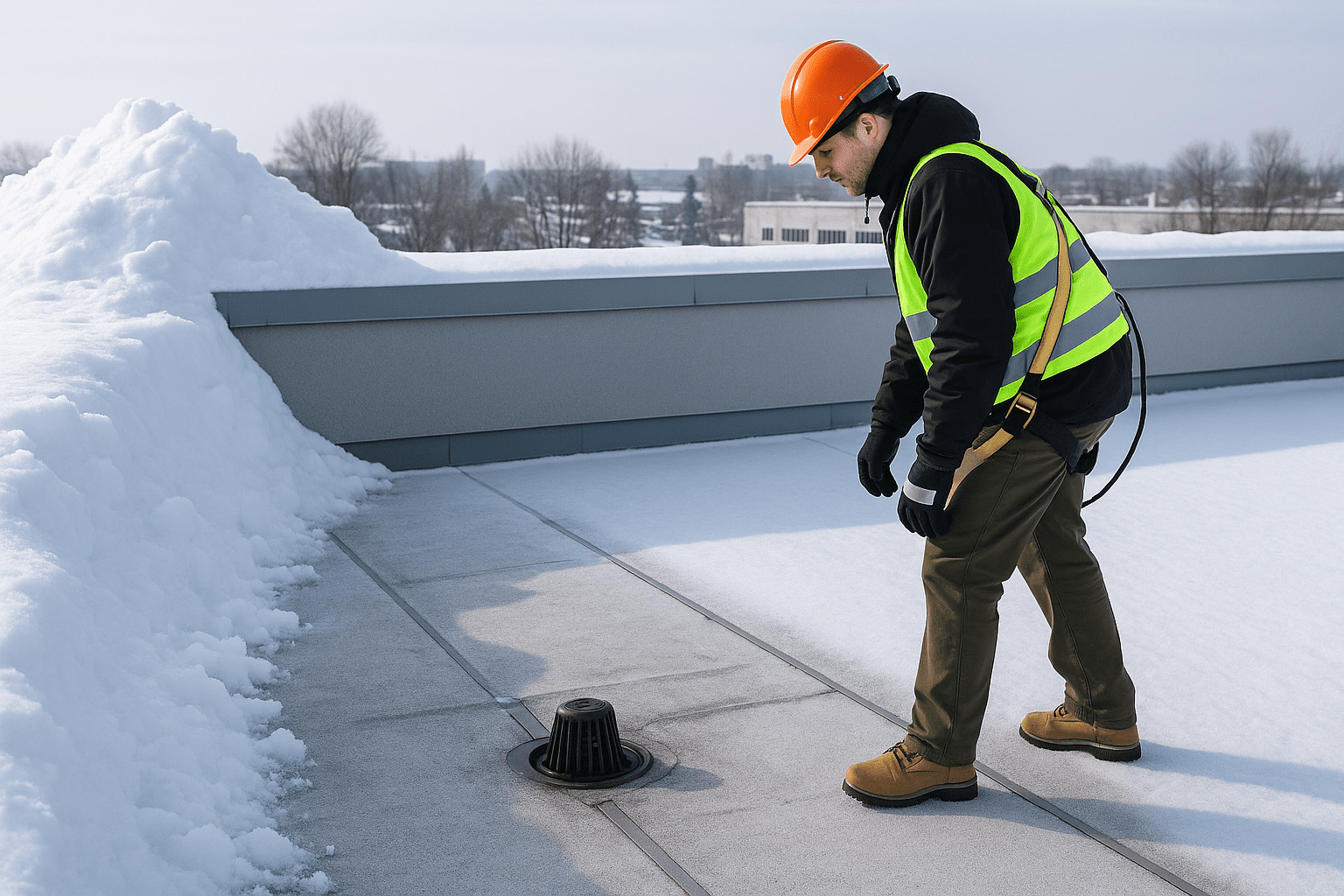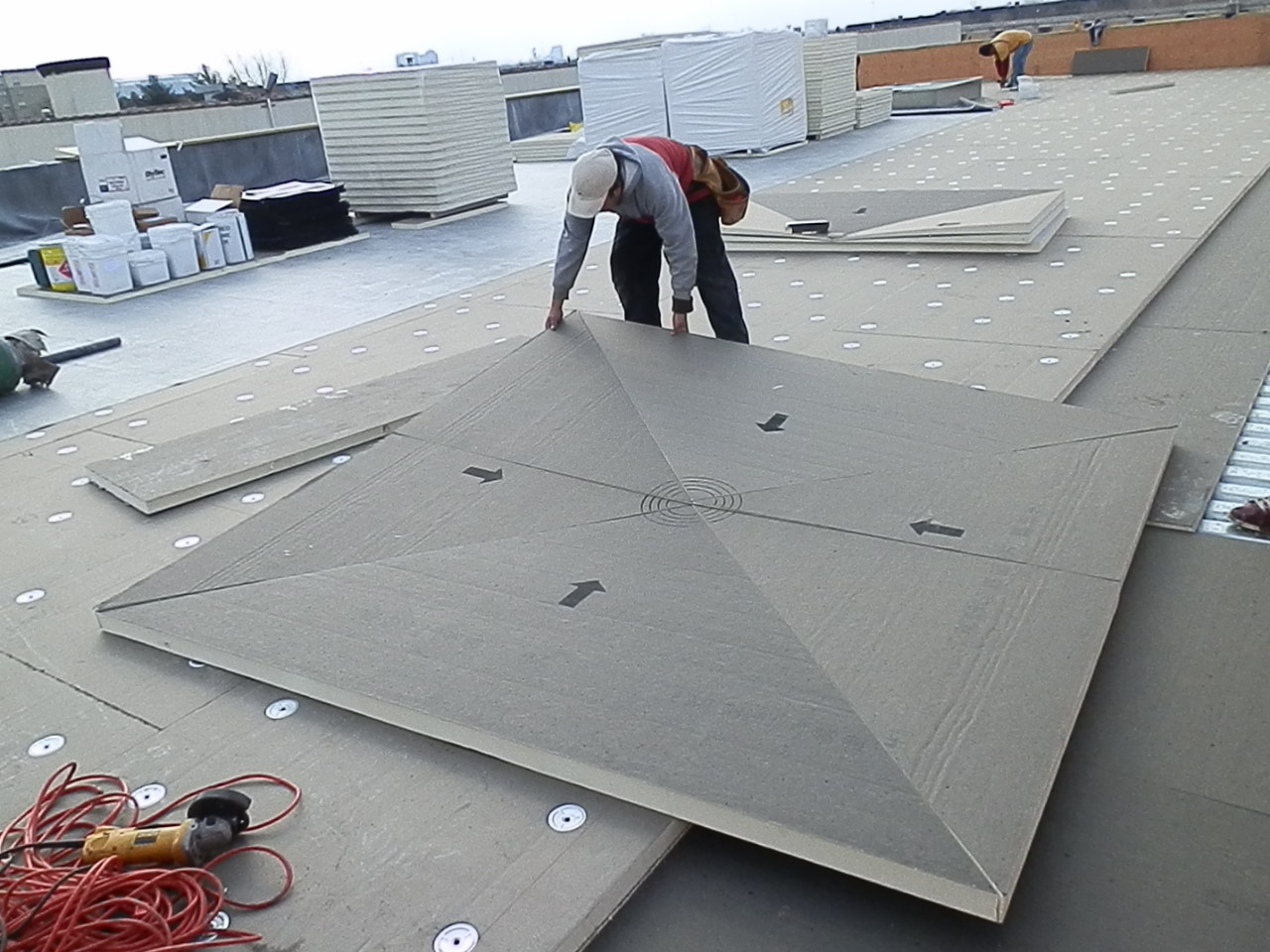
Independent field QA inspection during another contractor's installation — verifying membrane installation, seam integrity, flashing details, and manufacturer warranty eligibility on Dallas commercial projects we are not building.
Third-party quality inspection is different from owner's representative work in one important way: it is a specific technical inspection engagement, not ongoing advisory through the project lifecycle. An owner, general contractor, or property manager retains us to walk a roof during or after another contractor's installation, document what we find against the manufacturer's published installation standard and the project's contract specification, and deliver a written report.
We do this on Dallas projects regularly — mostly for out-of-town owners who hired a local contractor and want an independent field check, for general contractors who need documented QA on a roofing subcontractor's installation before they accept substantial completion, and for asset managers whose portfolio manager requires third-party QA documentation for projects above a certain contract value.
The inspection is documented to manufacturer-inspection standard. We photograph every finding, key it to the roof zone diagram, cite the specific manufacturer detail requirement or specification section the condition violates, and categorize findings as: warranty-jeopardizing (must correct before manufacturer inspection), specification deviation (correction required per contract), or observation (no immediate action required, documented for asset record). Owners get a report they can give directly to the installing contractor as a correction-required list.
Seam integrity: We run a probe test on a representative sample of heat-welded seams — minimum one probe test per 500 linear feet of seam, plus every seam in a flashing transition zone, every seam within 12 inches of a penetration, and every T-junction. Probe testing catches cold welds that pass visual inspection. On a 100,000 sq ft TPO installation, we typically test 800-1,200 linear feet of seam.
Flashing details: Parapet walls, penetrations, drains, curbs, and expansion joints — we photograph each one against the manufacturer's published detail drawing. Dallas buildings with Blackland Prairie clay movement have a higher failure rate at parapet flashings and expansion joints than most other metro areas; we focus additional attention here. Missing or undersized flashing dimensions are the single most common warranty-jeopardizing finding in Dallas commercial TPO installations.
Fastener pattern: For mechanically attached systems, we pull a sample inspection of the fastener pattern at the field, perimeter, and corner zones. We verify spacing against the approved wind-uplift design. Perimeter and corner zones require higher fastener density than the field; we find pattern errors here on roughly one in four Dallas commercial projects we inspect.
Insulation and cover board: Where accessible at penetrations, drains, or inspection ports, we verify that the insulation stack matches the specification — polyiso type and thickness, cover board type, and fastener pattern through the insulation. Substituted insulation that does not
Most major manufacturer NDL warranty inspections in the Dallas market are performed by the manufacturer's own field rep or factory-credentialed inspector. These inspections are not pass-fail at the building level — they produce a punch list of conditions that must be corrected before the warranty is issued. The punch list period varies by manufacturer (typically 30-90 days after the inspection).
We support owner and general contractor teams through manufacturer warranty inspections in two ways: pre-inspection, we walk the roof and identify probable punch-list items so the installing contractor can correct them before the manufacturer inspector arrives; post-inspection, we scope and manage the remediation work that the punch list requires, then submit the completion documentation to the manufacturer's warranty desk.