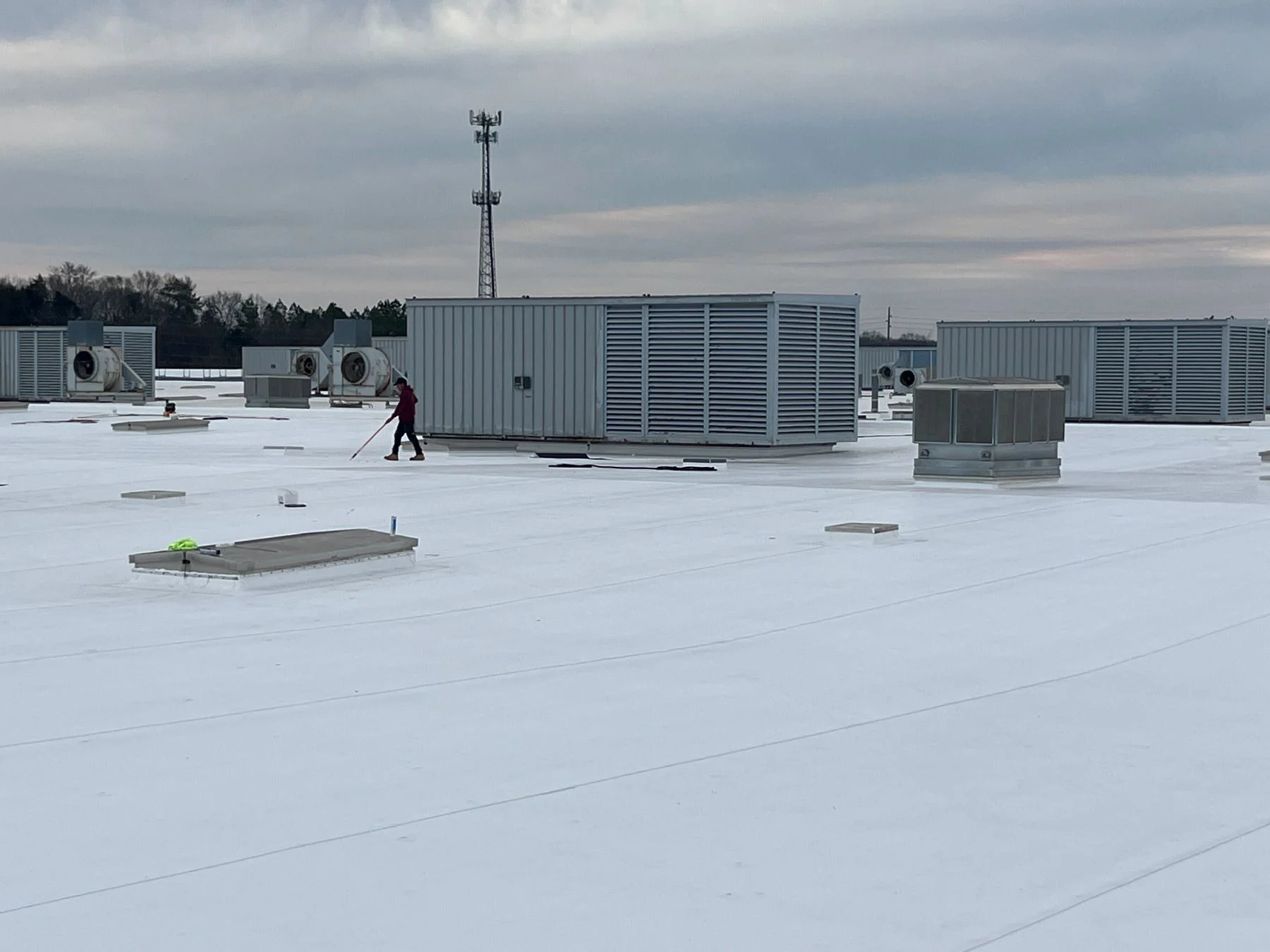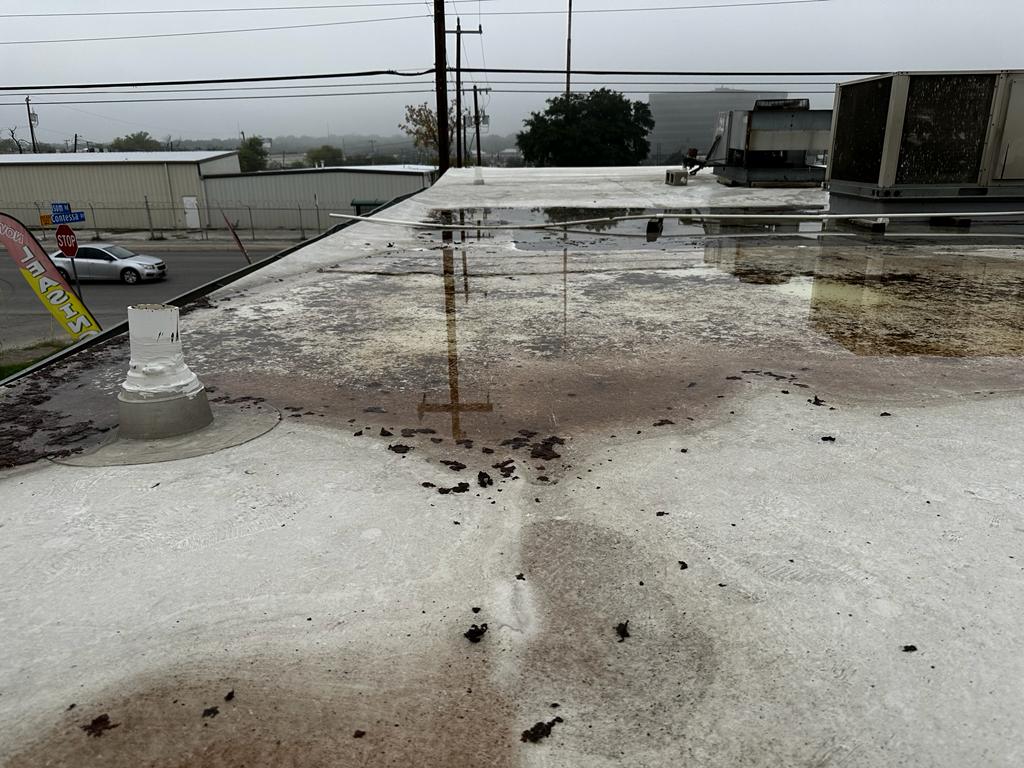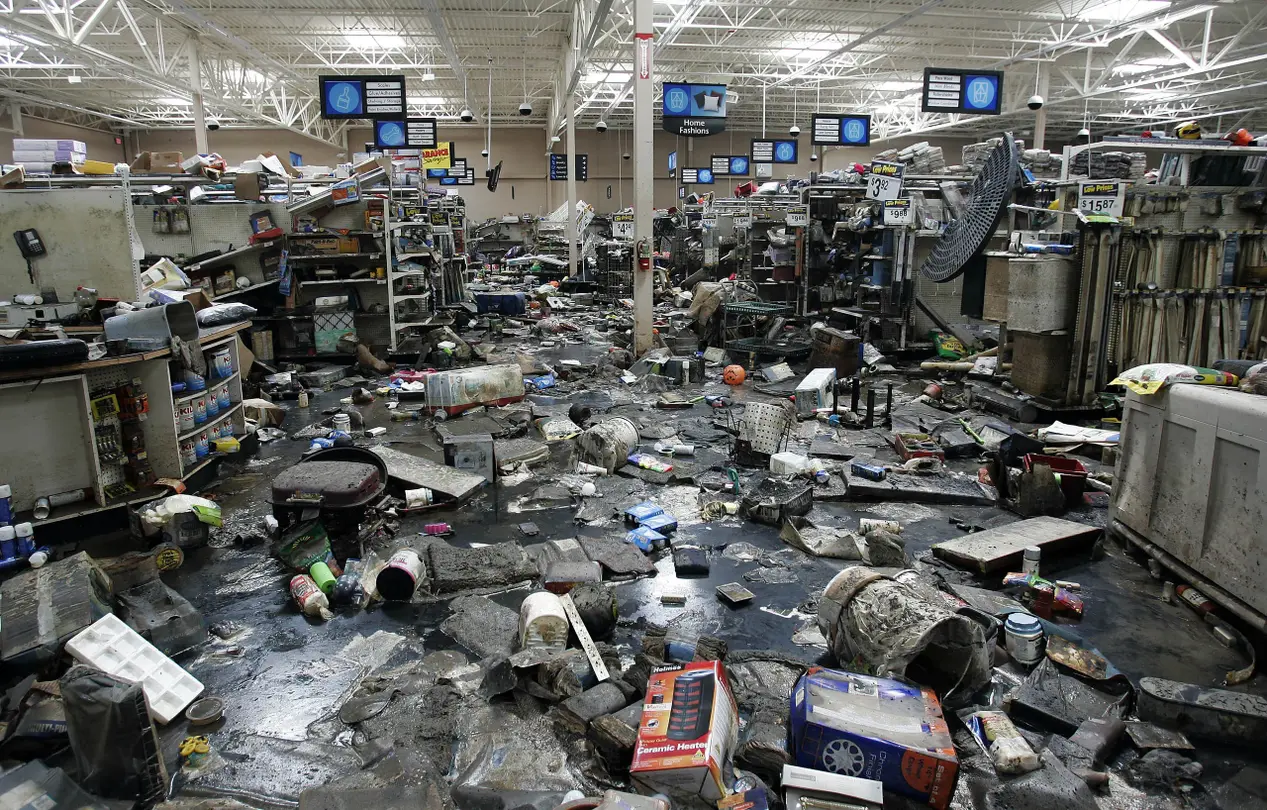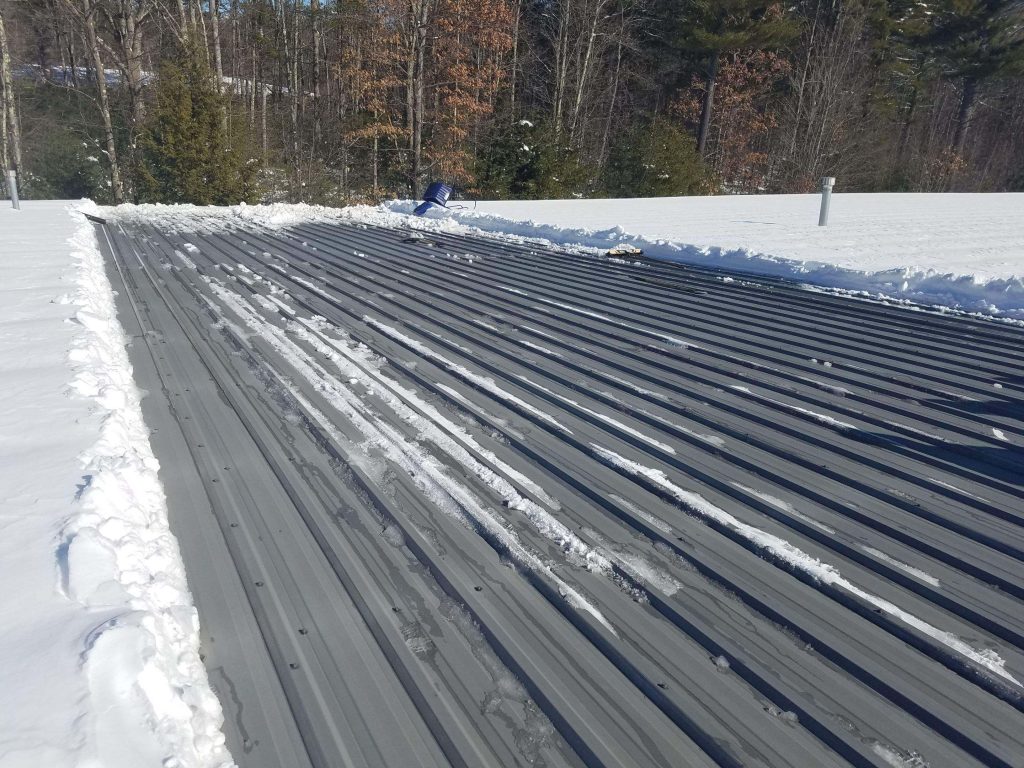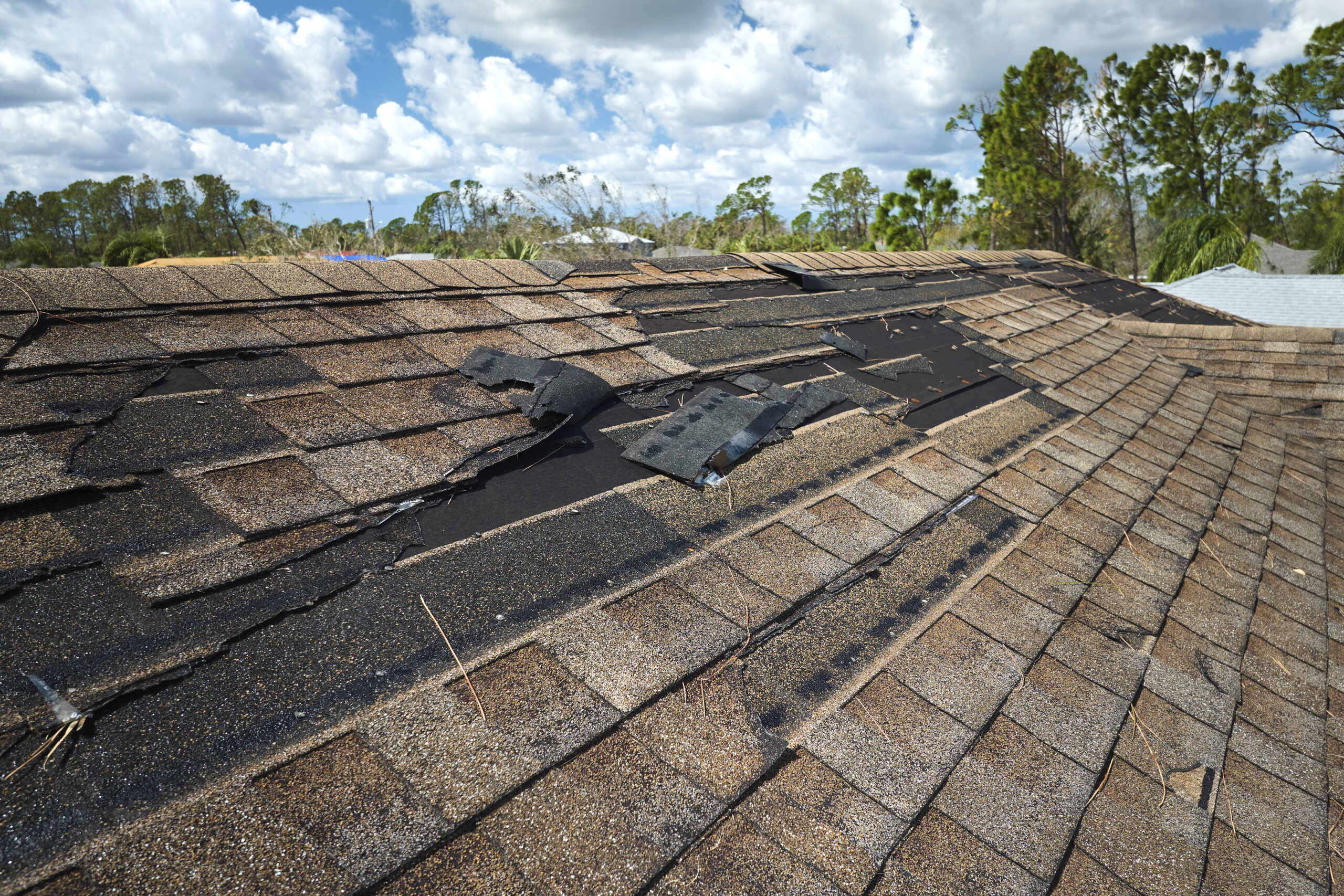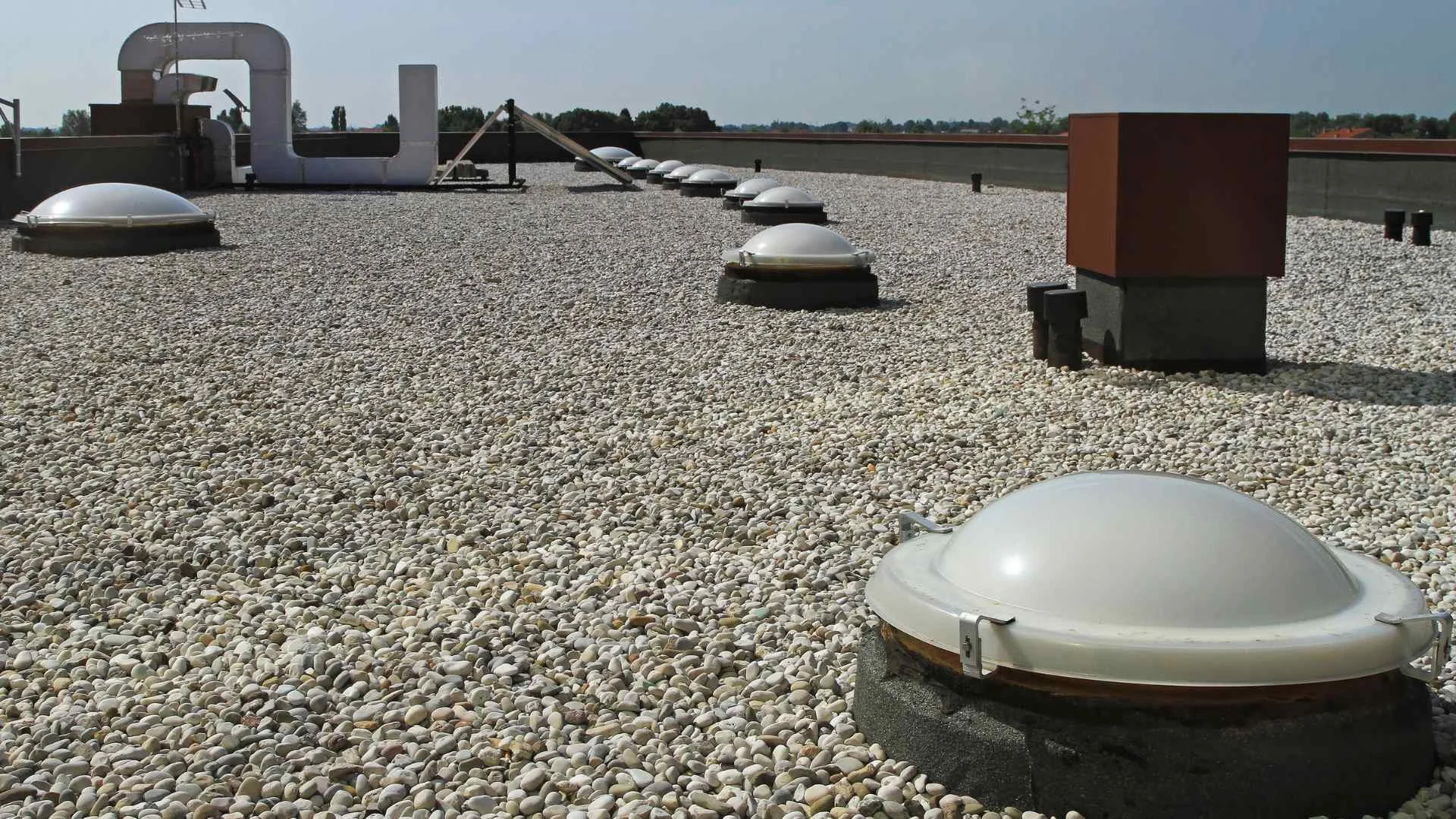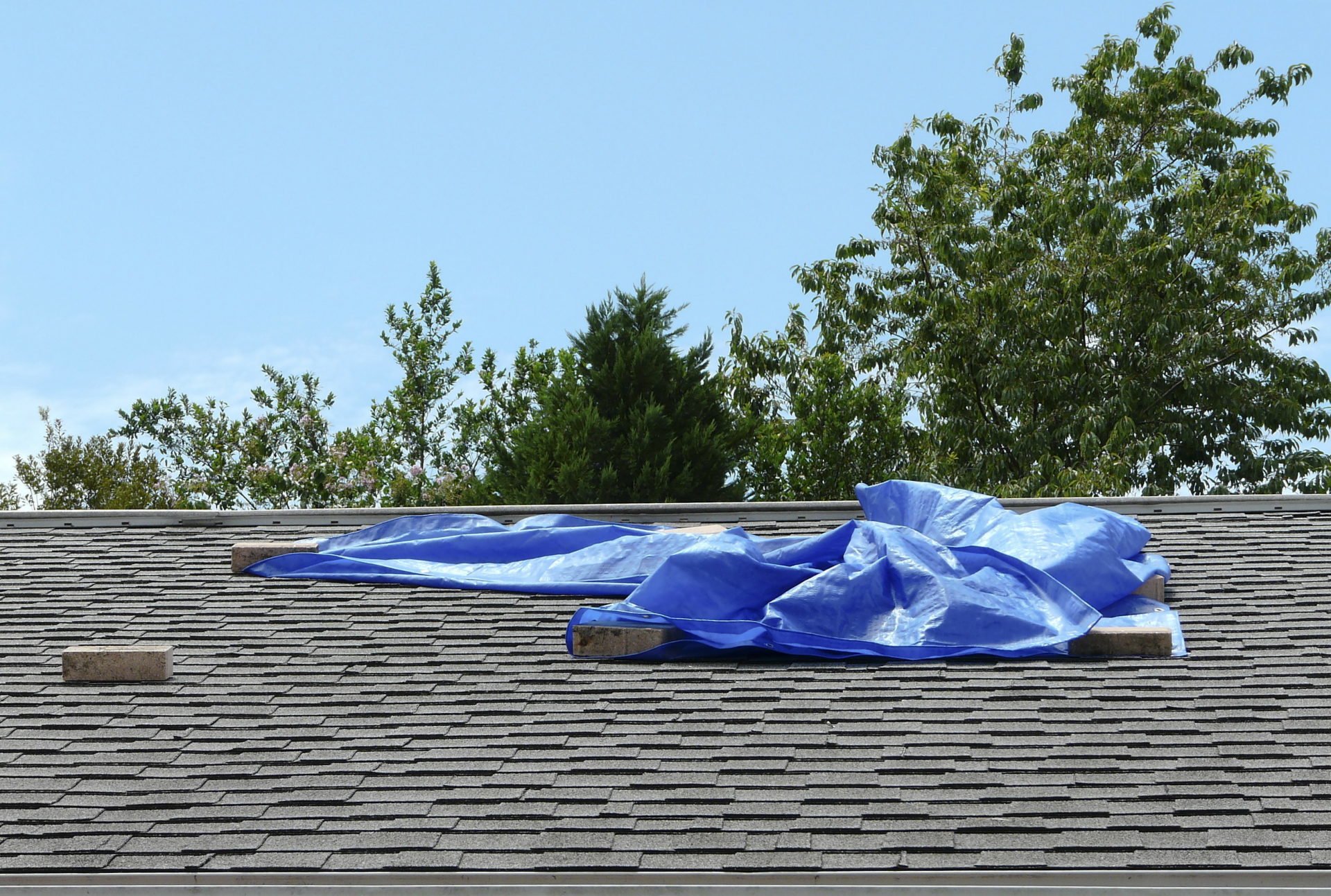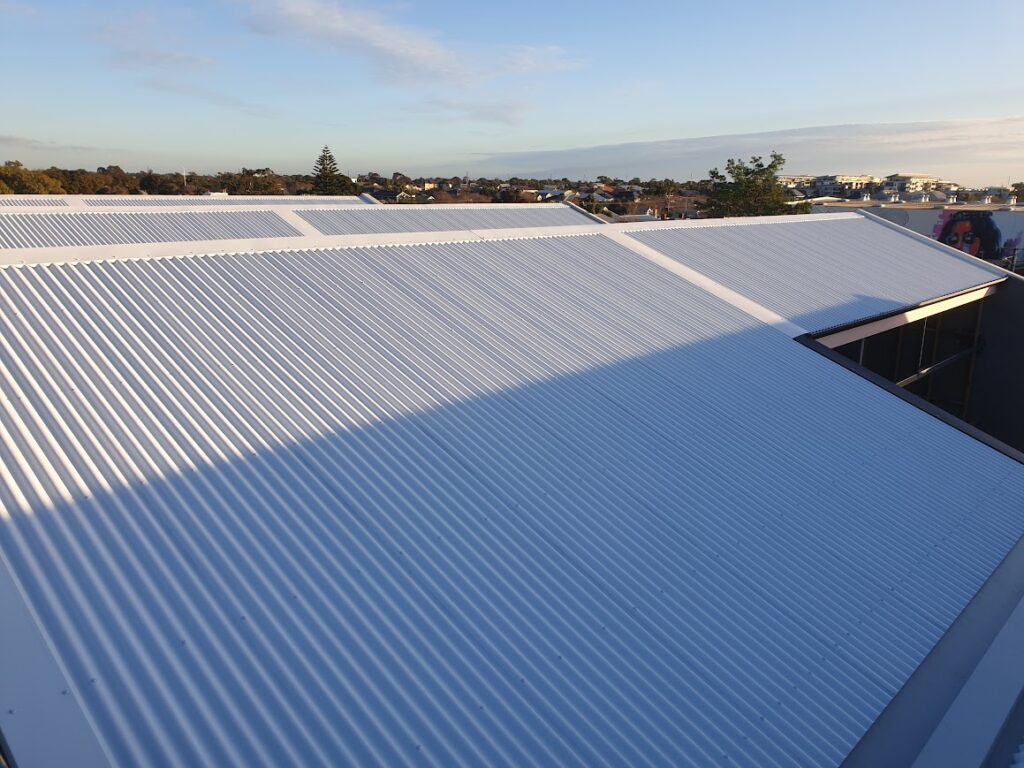
Wind damage on a flat commercial roof does not always look like wind damage. The failure pattern depends on attachment method, membrane age, and where the wind hit. We read those patterns and build documentation that captures what actually happened.
In October 2019, a confirmed tornado track crossed NW Dallas, damaging the industrial and office buildings along the Walnut Hill and Royal Lane corridors. We inspected buildings in that track where the wall cladding and signage made the wind damage obvious — and buildings two blocks away where the only visible evidence was a 40-foot strip of membrane that had peeled back at the building's southwest corner. Both buildings had wind damage. One was obvious; one required reading the fastener pullout pattern to understand what had happened.
Straight-line wind damage is the more common type in Dallas commercial roofing. Derecho-class and thunderstorm outflow events push 60-80 mph gusts across DFW several times per year. That wind loads the membrane edge differently than tornado-path damage: instead of catastrophic pull-off over a wide zone, straight-line events typically produce edge lift at perimeter terminations, flashing cap displacement at parapets, and fastener pullout at the perimeter rows where the wind-uplift pressure peaks.
We build documentation for both types. The scope package shows what happened, where it happened, what the pre-event attachment looked like, and what repair or replacement is warranted.
Wind pressure on a flat roof is not uniform. ASCE 7 (the structural loading standard) maps roof zones into field, perimeter, and corner zones — corners carry roughly 3x the uplift pressure of the field. Most wind damage on commercial flat roofs starts at the perimeter and corner zones where fastener pattern density is supposed to be highest. When it is not, or when the membrane has aged to the point where the lap seam adhesion has dropped, wind gets under the perimeter and the pull-off cascade begins.
Ridge-pattern membrane tearing is a specific failure mode we see on mechanically attached TPO roofs after high-wind events. The membrane, fastened in rows perpendicular to the ridge, billows between fastener rows under high sustained wind load. The billow creates a flutter that fatigues the membrane along the fastener row, eventually tearing along a line that tracks the fastener pattern. This damage is visible from above as a linear tear that looks almost geometrically straight — the first sign that the wind-uplift pattern was the cause rather than a puncture or installation defect.
Fastener pullout is the other major failure mode on older mechanically attached systems. In Dallas, metal deck that has seen 20+ years of thermal cycling can develop oversized fastener holes at the attachment point. When wind loads the membrane, the fastener pulls through the deck instead of holding. We probe for pullout at the perimeter rows of any roof that sustained wind loading — and we photograph the pullout evidence because it is the documentation that establishes that the fastener pattern failed under the load event, not through pre-existing neglect.
Fastener pullout documentation requires opening the membrane at each suspected pullout location, photographing the oversized hole in the deck, measuring the hole diameter against the fastener head specification, and recording the zone location on the roof diagram.
The distinction between pullout from wind loading and pullout from improper installation is important for claim attribution. Wind-loading pullout concentrates at the perimeter and corner zones where uplift pressure is highest, tracks from the building's windward face, and correlates with the documented wind event. Installation-defect pullout shows random distribution and often involves undersized fasteners or missed structural members. We document the pattern and let the evidence speak.
We include the design wind speed for the building's location (Dallas is typically ASCE 7 Exposure B or C, 115-120 mph basic wind speed), the fastener pattern density the roof was designed to, and the pullout concentration map.