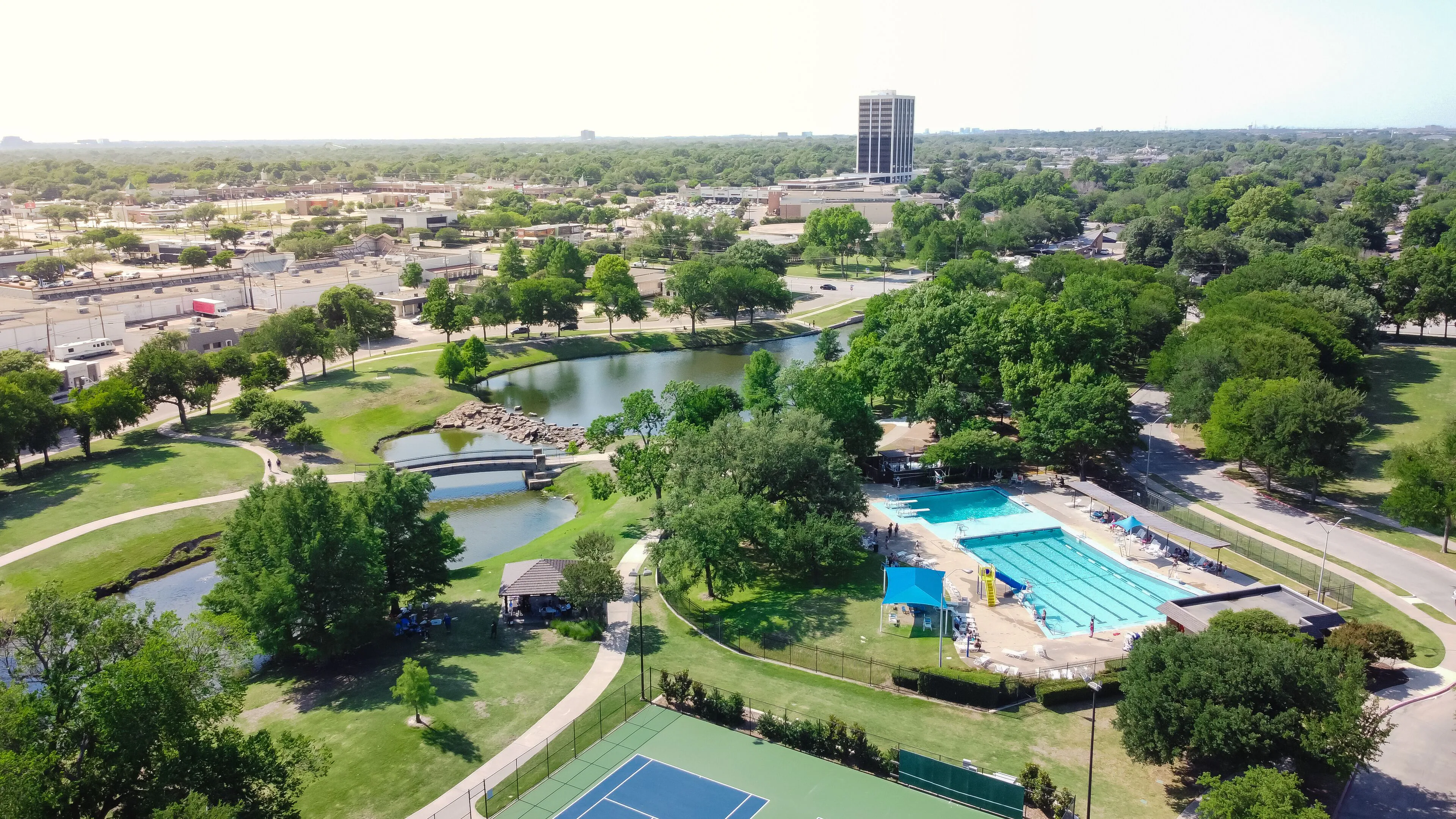
Northwest Highway and Forest Lane retail strips, the 1970s strip-mall inventory that defines most of Lake Highlands' commercial square footage, and one of the heaviest reroof concentrations per square mile in northeast Dallas. Replacement cycles here are running hard through 2027.
Lake Highlands' commercial inventory is almost entirely a 1970s story. The neighborhood's retail corridors — Northwest Highway from White Rock Lake east to Audelia Road, Forest Lane from US , and the supporting strips along Skillman, Audelia, and Walnut Hill — were built out during the decade when strip retail meant modified bitumen BUR on lightweight steel framing over metal deck. That inventory is now 45-55 years old and is running one of the heaviest reroof concentrations in our northeast Dallas service area.
We have done more Lake Highlands strip-mall replacement work in the past three years than in the previous decade combined, and our project pipeline for Lake Highlands through 2027 is as full as any geographic segment of our business. The reason is straightforward: a 1975 BUR system that was recovered in 1995 with modified bitumen SBS is now at the end of its second life, and the building owners who deferred the replacement decision through 2020-2022 because of cost or uncertainty are now making it because the repair bills have become larger than the replacement amortization would be.
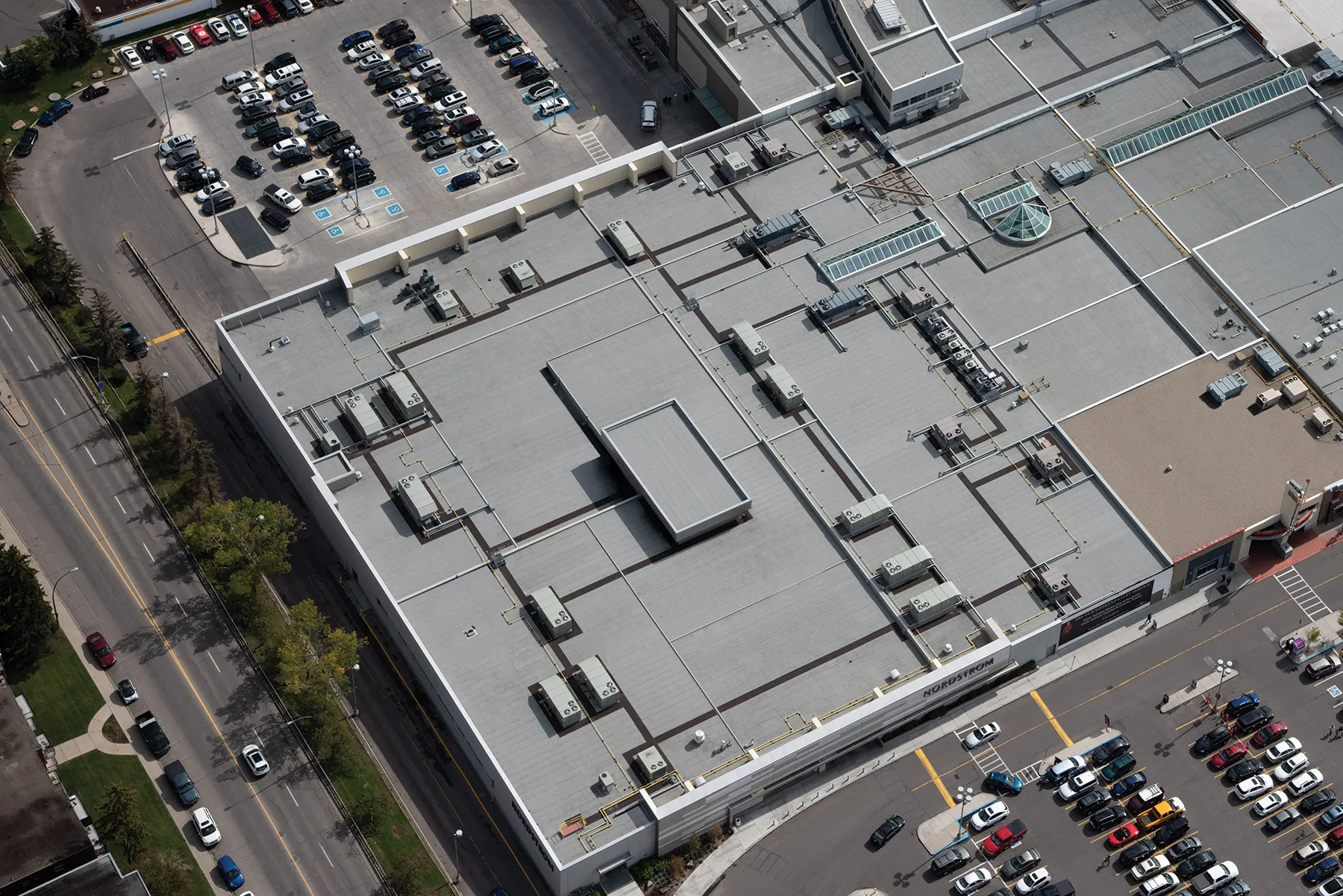
Lake Highlands commercial buildings are predominantly small-footprint strip retail — 5,000 to 20,000 square foot sections, with neighborhood-anchor strip centers running 40,000 to 80,000 square feet. The tenant mix (nail salons, dry cleaners, restaurants, medical offices, insurance offices, and neighborhood grocery anchors) creates a scheduling environment that requires coordination with multiple tenants across a single project — we manage that coordination as a standard part of every Lake Highlands strip-center scope.
The Northwest Highway corridor through Lake Highlands — from the White Rock Lake commercial nodes east past Audelia Road and toward the Garland city line — carries a dense inventory of 1970s strip retail that is collectively in the most active reroof cycle of any Dallas neighborhood commercial corridor we service. The buildings here were built fast, built to a budget, and built on the modified bitumen BUR system that was standard practice in 1972-1980.
The Northwest Highway buildings have three common structural characteristics that affect our replacement scope: lightweight steel-tube framing (which limits the superimposed roof load we can add with new insulation), metal deck that has been exposed to roof drainage infiltration for 40-50 years (meaning we find more deck corrosion here than on any other 1970s building type), and parapet heights of 18-24 inches that are structurally marginal for the added load of masonry parapet repair. We pull deck inspection ports at the drain fields and parapet bases on every Northwest Highway building before we finalize a replacement scope.
Most Northwest Highway strip centers have absentee ownership — the buildings are held in small LLCs or family trusts managed by property management companies. Our communication on these projects goes through the property manager, who is accountable to the owner but not always empowered to make capital decisions unilaterally. We present condition reports in a format that property managers can forward to owners without translation — clear findings, clear cost options, clear recommendation.
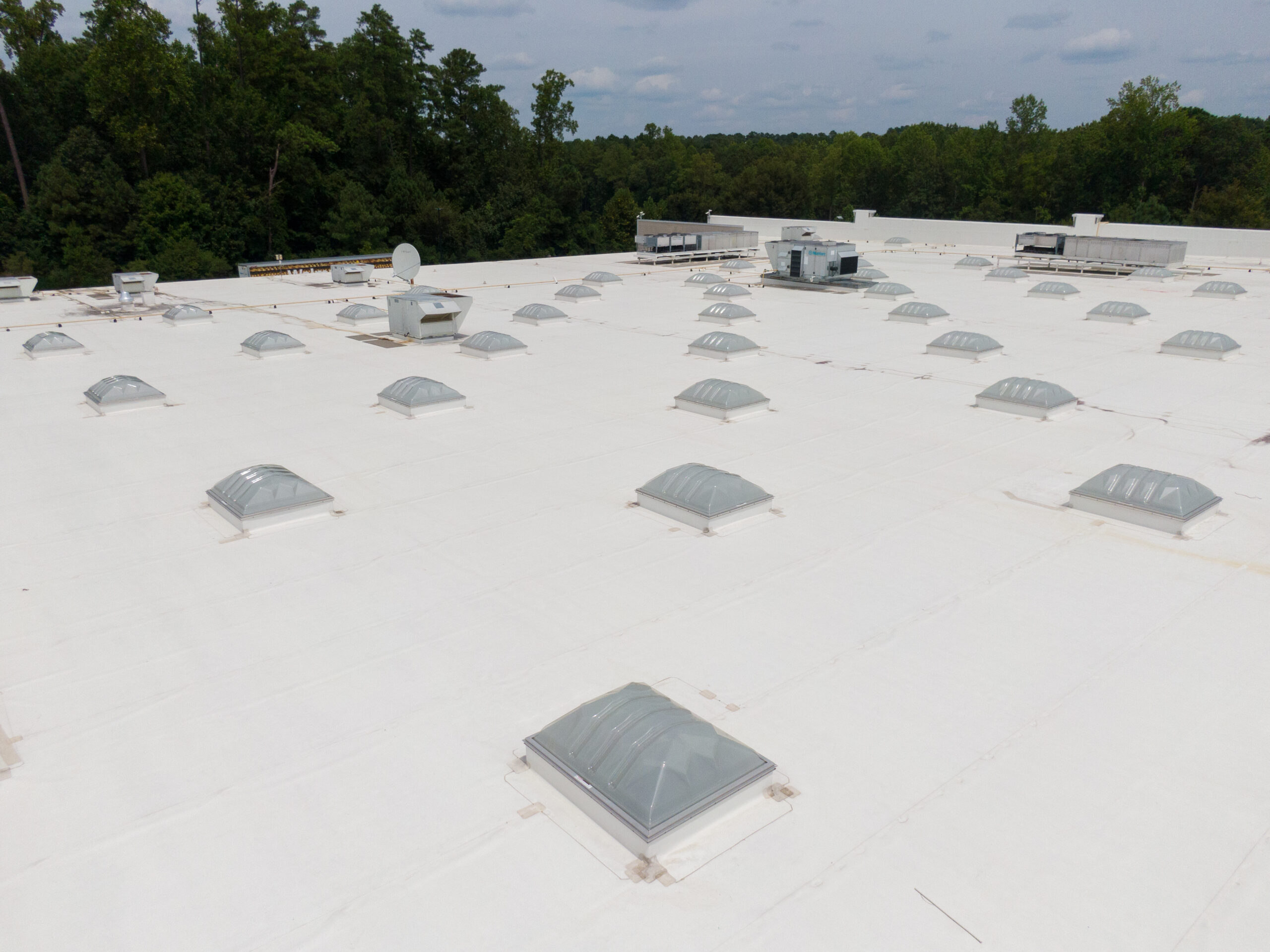
Forest Lane through Lake Highlands — from US intersections — carries a similar 1970s strip-retail inventory but with slightly larger building footprints than Northwest Highway. The Forest Lane buildings include several former grocery-anchor strip centers that have cycled through multiple anchor tenants over the decades and now carry the roofing consequences of those tenant changes: penetrations from prior HVAC configurations that were covered over rather than properly closed, drain fields that were reconfigured when floor plans changed, and modified bitumen patches over the original BUR that trace the history of every interior renovation.
The former Safeway at Abrams and Forest Lane, the former Kroger on Skillman, and several other converted grocery-anchor buildings in this corridor have roof plans that are among the most complex we encounter in Lake Highlands — the grocery HVAC and refrigeration mechanical infrastructure left behind a penetration density that subsequent tenant configurations could not fully address. We do full penetration audits on these buildings before we propose a scope, because the number of penetrations drives the detail cost more than the square footage does.
Scheduling on Forest Lane tenant-occupied strip centers requires a phase plan that keeps every tenant operational during the project. We map the tenant plan, identify which roof sections are over which tenant spaces, and sequence production to complete each section over an occupied tenant space in a single production day — so the tenant is never above open roof overnight.