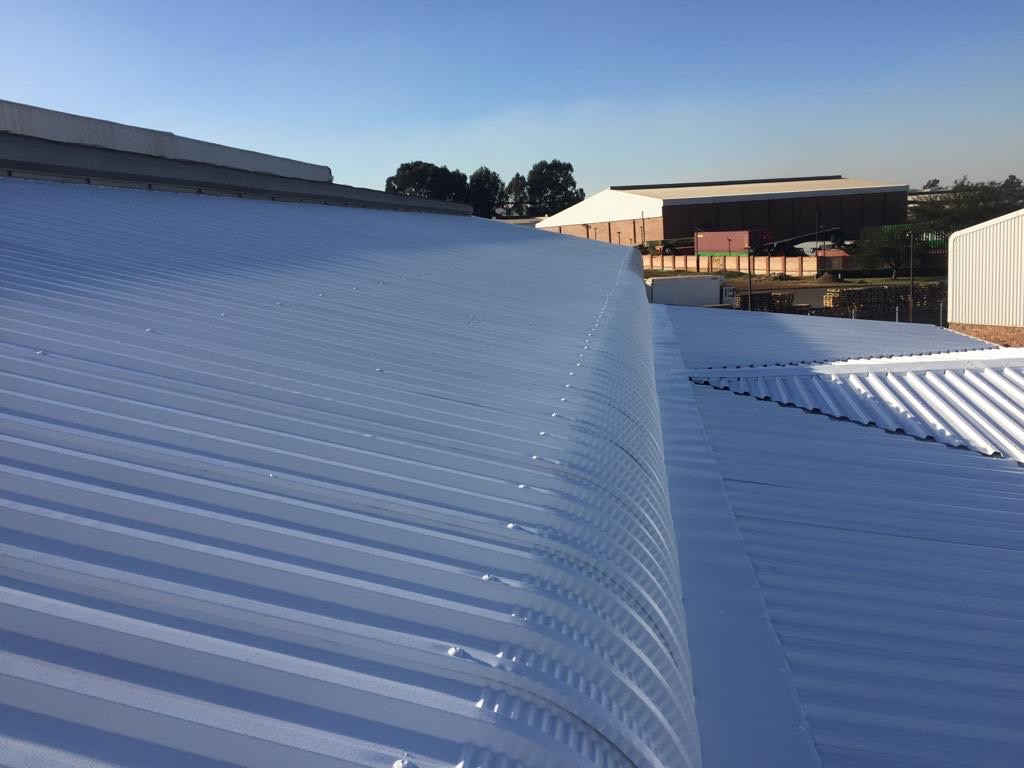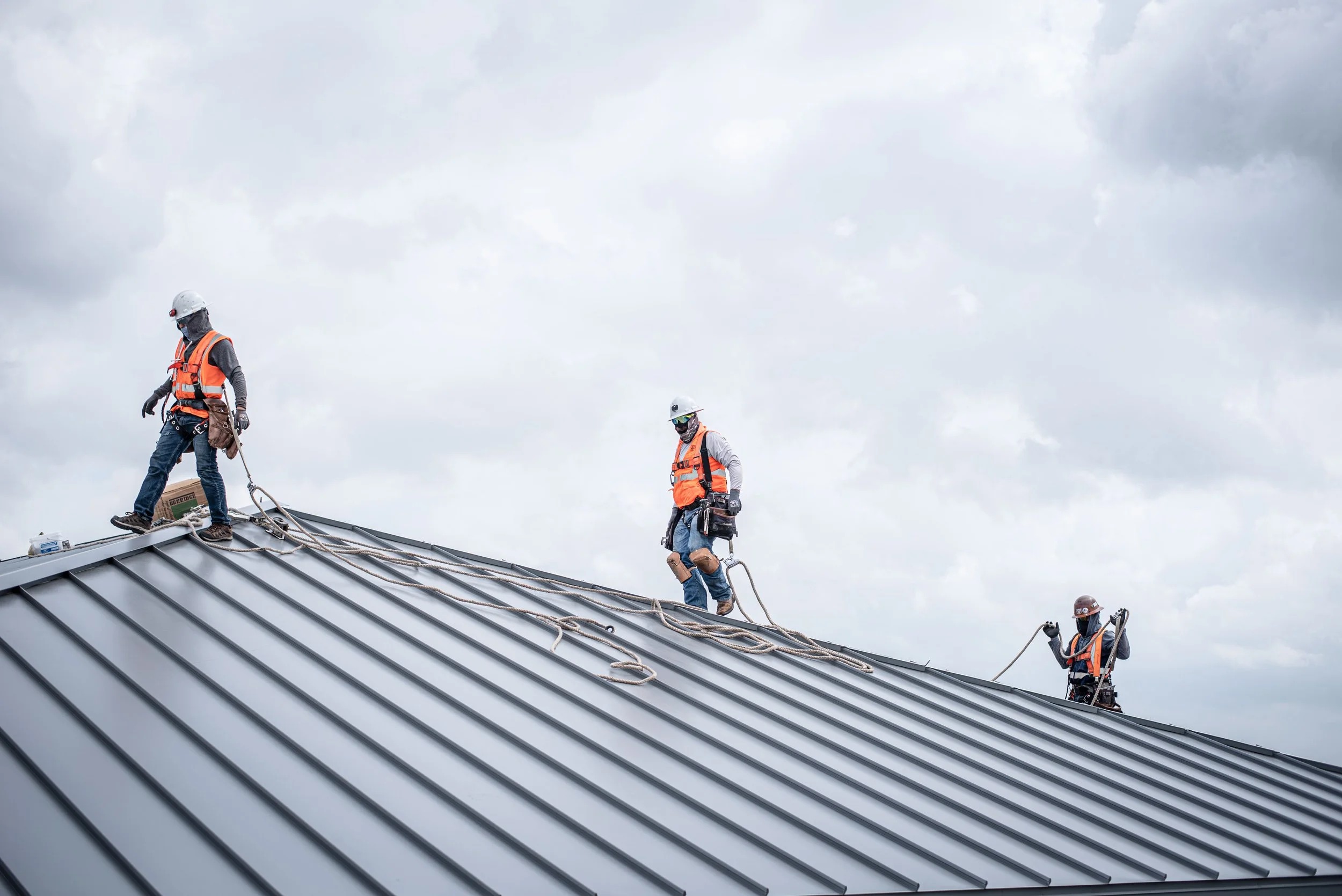
Standing seam metal roofing on Dallas commercial buildings — whether you're restoring a Bishop Arts mixed-use building or cladding a new Uptown office structure — carries the longest service life of any roofing system we install. We scope, install, and close out standing seam with substrate warranties up to 40 years.
Standing seam metal roofing has been showing up on Dallas commercial projects in two distinct contexts. The first is adaptive reuse: the Bishop Arts and Design District redevelopments have put standing seam on converted warehouse buildings and infill mixed-use projects where the exposed panel lines read as intentional architectural detail rather than afterthought cladding. The second is new commercial construction where the owner's capital horizon is 40-plus years and the lifecycle math on a standing seam system — higher upfront, dramatically lower reroof frequency — pencils out against single-ply alternatives.
We install standing seam in both contexts. We are not a residential metal roofing shop that also does commercial work on the side. Every standing seam project we run is scoped against the building's slope, structural capacity, thermal movement, and the manufacturer's warranty requirements — because standing seam fails at the details, not the panels, and the details require precise alignment with the manufacturer's published specifications.
The two decisions that drive most standing seam specifications are finish (Galvalume substrate vs. Kynar-painted color) and seam type (snap-lock vs. mechanical). Both decisions interact with the building's slope, span, and how much thermal movement the roof assembly needs to accommodate. We walk through those decisions with every client before anything gets ordered.
Galvalume — a zinc-aluminum alloy coating on the steel substrate — is the base durability standard for commercial standing seam. It carries a 40-year substrate warranty from major manufacturers (including Drexel Metals, McElroy, and MBCI, all of which ship to Dallas-area distributors) and handles DFW's thermal cycling and UV load without the color-fade degradation that older painted finishes showed. If the building does not need a color statement, Galvalume is the honest specification: maximum longevity, lowest price per square, zero repainting maintenance.
Kynar 500 or 70%-PVDF painted finishes add color and architectural flexibility. These are the finishes on most of the Bishop Arts and Design District projects where the metal system is part of the building's visual identity — dark bronze, charcoal, and weathering-steel looks have become standard in Dallas adaptive reuse. Kynar finishes carry a 40-year substrate warranty and a 30-year color/chalk/fade warranty from most manufacturers. They cost more per square than Galvalume but do not require painting over the system's life.
One consideration specific to Dallas: the urban heat island in the Design District and Uptown corridors drives clients toward lighter Kynar colors (cool-roof whites and light grays) to qualify for Cool Roof Rating Council (CRRC) ratings that support Title 24 or local green building credits. We specify the CRRC-rated option when the project needs it.
Snap-lock panels interlock at the seam without a mechanical seaming tool. They install faster, cost less per square in labor, and are the dominant choice for slopes above 3:12 where the panel can drain freely and the seam is not under standing-water pressure. Most of the commercial standing seam we install on sloped warehouse annexes and low-rise office buildings in the Cedars and Design District corridors is snap-lock.
Mechanical seam panels are crimped (180° or 360°) with a powered seaming tool after installation. The double-lock seam provides a weather barrier that performs reliably at slopes down to 1:12 — the range where most commercial flat-to-low-slope standing seam applications live. Any standing seam project on a Dallas commercial building with a roof slope below 3:12 should be mechanical seam. Snap-lock below 3:12 is a failure waiting to happen, and we will not specify it regardless of cost pressure.
Thermal movement matters on both seam types. Standing seam panels on a 200-foot commercial building in Dallas will expand and contract by up to 1.5 inches across the annual temperature range. The clip system — concealed clips that hold the panel to the structural substrate while allowing longitudinal movement — is where most standing seam failures originate when they are under-specified. We design the clip pattern to the actual thermal range, the panel's coefficient of expansion, and the manufacturer's published allowance.