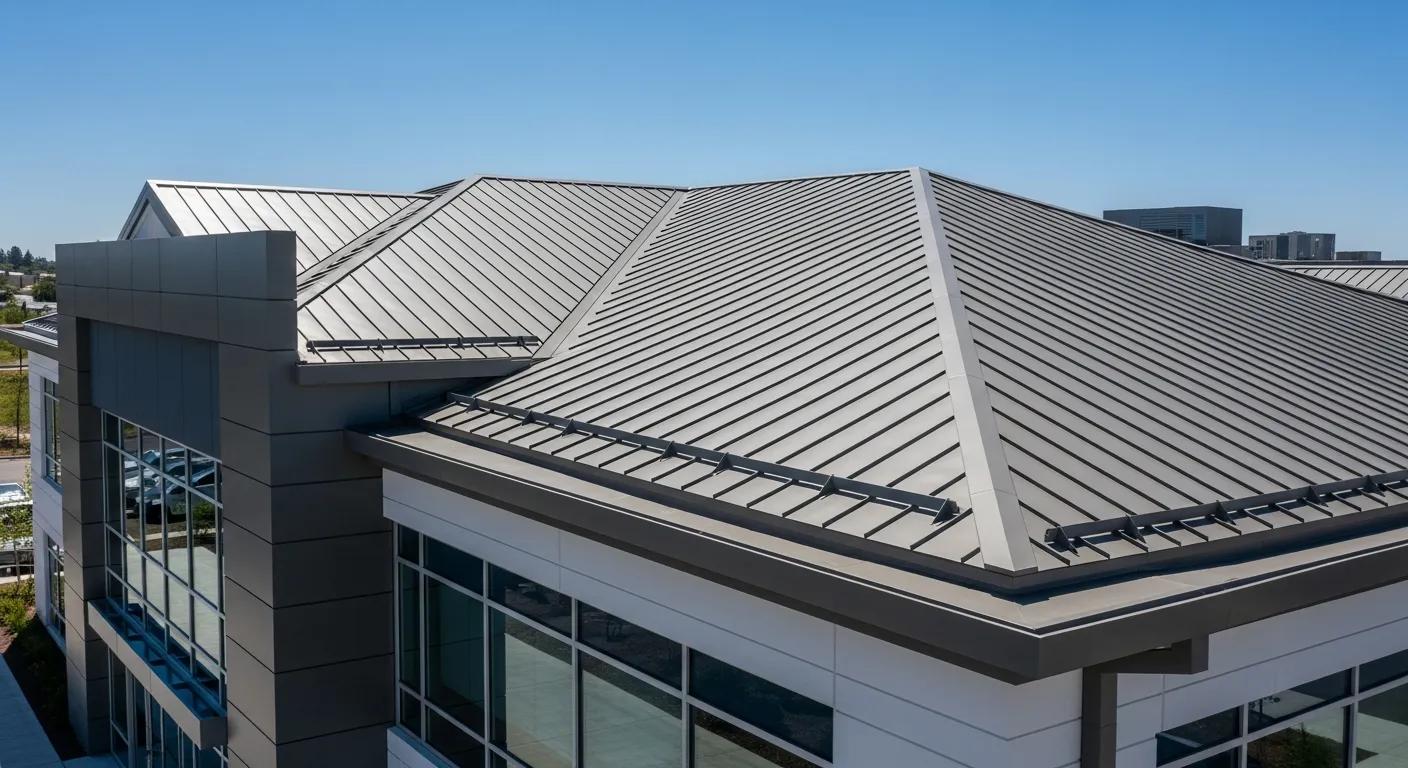
We model commercial roof systems over 30-40 year capital horizons for Dallas buildings — installed cost, maintenance, warranty costs, emergency repair, and replacement — so owners can compare system options on total cost of ownership rather than bid day price.
The cheapest commercial roof on bid day is rarely the cheapest roof over a 30-year capital horizon. A 60-mil TPO system at $7.00/sq ft installed might require a full replacement at year 18 with $500,000 in capital mobilization. An 80-mil TPO system at $7.60/sq ft installed with a semi-annual maintenance program might run to year 24 and into a recover option at half the replacement cost. The bid-day difference is $60,000 on a 100,000 sq ft roof. The lifecycle difference could be $400,000 or more.
Life-cycle cost analysis makes this comparison explicit and documented. We model the major cost events for each system option under consideration — installation, semi-annual maintenance over the warranty term, expected emergency repair frequency based on Dallas climate exposure history, warranty cost, and end-of-life replacement or recover — and present total net present value over the modeling horizon the owner specifies (usually 20, 30, or 40 years, depending on capital planning cycle).
Dallas commercial buildings have enough climate-specific history to model with reasonable confidence. We know the emergency repair frequency on 60-mil mechanically attached TPO in DFW hail-belt exposure because we have maintained buildings on that system for 15 years. We know that modified bitumen buildings in the Stemmons corridor installed in 1995-2000 are generating replacement cycles in 2023-2028 at approximately $14-18/sq ft installed. This market-specific cost history makes Dallas LCC models more accurate than what a general industry reference would produce.
Year-0 installation cost: Quoted from our scope against the same building specification for each system option under comparison. This includes membrane, insulation, fasteners, flashings, drains, walkway pads, permits, and manufacturer warranty premium.
Annual maintenance cost: The documented maintenance cost for each system under the required manufacturer warranty maintenance program, plus our observed average corrective maintenance cost per square foot per year for that system type in Dallas conditions. The DFW hail belt inflates corrective maintenance costs above national averages for surface-exposed systems; we use Dallas-specific rates.
Major repair events: Based on our maintenance records and project history, we model the expected capital events at years 8-12 (typical first major repair cycle on DFW TPO with hail exposure history), years 15-18 (second cycle, often requiring more extensive flashing replacement and possible insulation spot replacement), and years 20-25 (end-of-warranty-period assessment cycle). Each event is probability-weighted, not deterministic.
Replacement or recover cost at end of life: Modeled as a future value with an assumed inflation rate for construction labor and materials. We typically run two scenarios: full replacement (assumes no recover path) and recover (assumes dry insulation and sound deck, which reduces future capital by 35-50%). The recover scenario is conditional — we flag the uncertainty and show the sensitivity analysis.
Net present value: All future costs discounted at the owner's specified discount rate. Most Dallas institutional owners use 5-7% discount rates for capital project LCC models; we default to 6% unless the owner specifies otherwise.
60-mil mechanically attached TPO vs. 80-mil fully adhered TPO: The most common comparison on Dallas Class A commercial buildings. The 80-mil fully adhered system has higher year-0 cost, longer warranty term (often 25 vs. 20 years), and lower average maintenance cost due to fewer seam-stress failures under Dallas thermal cycling. On a 30-year LCC, the 80-mil fully adhered system is often lower total cost despite a higher bid-day price.